
When you struggle to hear conversations in noisy rooms or turn up the TV too loud, it might not just be background noise—it could be your audiometry testing, a standard clinical procedure used to measure hearing sensitivity across different frequencies. Also known as a hearing test, it’s the most reliable way to find out if your ears are picking up sounds the way they should. Unlike a quick check at a pharmacy, audiometry testing is done in a quiet room with calibrated equipment, and it gives doctors a clear picture of your auditory function, how well your ears and brain process sound from low rumbles to high pitches.
Most people think hearing loss only affects older adults, but it’s not that simple. Kids with recurring ear infections, factory workers exposed to loud machinery, musicians, and even frequent headphone users can all show early signs. audiogram, the graph produced during audiometry testing that plots hearing thresholds at different frequencies tells the story—whether your hearing dips at high frequencies (common with age or noise damage), or if both ears are affected equally. This isn’t just a number; it’s a roadmap. If your audiogram shows a drop at 4,000 Hz, that’s often the first sign of noise-induced hearing loss. If both ears show the same pattern, it might point to genetics or long-term exposure. If one ear is worse, it could signal something more serious, like a tumor on the auditory nerve.
What’s often missed is how audiometry testing connects to other health issues. People with diabetes, heart disease, or high blood pressure are more likely to have hearing problems—because the tiny blood vessels in your inner ear are sensitive to circulation changes. Even medications like certain antibiotics or diuretics can damage hearing over time. That’s why doctors who manage chronic conditions often recommend regular hearing checks. It’s not just about understanding speech—it’s about catching early signals your body is sending.
And it’s not scary. The test takes less than 20 minutes. You wear headphones, hear beeps at different volumes, and press a button when you hear them. No pain. No needles. No preparation. If the results show a problem, the next steps are clear: hearing aids, lifestyle changes, or referrals to specialists. Many people delay testing because they think, "I’ll know when it gets worse." But hearing loss creeps in slowly. By the time you notice, you’ve already missed years of clear sound—grandkids’ laughter, music, quiet conversations with loved ones.
The posts below give you real, practical insights into how hearing health connects to other areas of medicine. You’ll find stories about how balance disorders like vertigo relate to inner ear function, how certain drugs can quietly damage hearing, and what steps to take after an audiometry test shows trouble. Whether you’re worried about your own hearing, a parent’s declining ability to follow conversations, or just want to know what’s normal as you age—this collection cuts through the noise and gives you what you need to act.
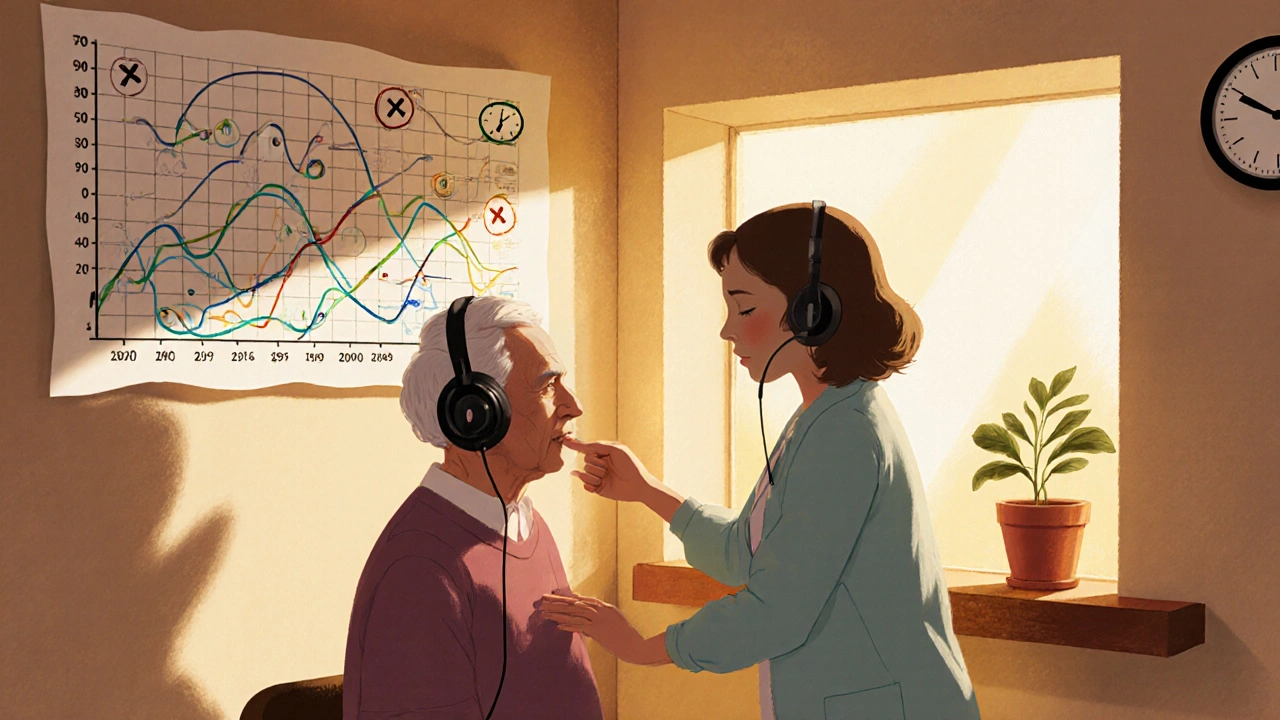
Audiometry testing measures your hearing sensitivity using decibel levels across frequencies. Learn how pure-tone and speech tests detect hearing loss, differentiate between conductive and sensorineural types, and guide treatment like hearing aids.
More