
When we talk about childproof medicine, the practice of securing medications to prevent accidental ingestion by children. Also known as child-resistant packaging, it's not just a box with a tricky cap—it's a critical layer of protection in every home with young kids. Every year, over 50,000 children in the U.S. end up in emergency rooms because they got into medicine they weren’t supposed to. Most of these cases happen not because parents are careless, but because they assume their child can’t reach it—or they think a little bit won’t hurt.
Here’s the truth: kids are curious, fast, and smart. They climb, pull, open, and mimic. A bottle left on a nightstand, a purse on the couch, or a pill organizer on the kitchen counter? These aren’t safe spots. medicine storage, how and where medications are kept to prevent access by children needs to be high, locked, and out of sight—even if you think your child isn’t mobile yet. Many parents don’t realize that toddlers as young as 12 months can open child-resistant caps with enough repetition. And while those caps help, they’re not foolproof. The real safety comes from putting the medicine in a locked cabinet, not just a high shelf.
pediatric medication safety, a set of practices designed to prevent accidental overdose or poisoning in children isn’t just about locking things up. It’s about knowing what’s dangerous. A single adult dose of certain medications—like blood pressure pills, antidepressants, or even some OTC painkillers—can be deadly for a child. Iron supplements, diabetes meds, and ADHD drugs are especially risky. And don’t forget: vitamins with iron, topical creams, and even liquid nicotine for e-cigarettes are all common culprits in poisonings. You don’t need to be a doctor to know this: if it’s not food, and it’s in your house, keep it locked away.
Many parents think they’re safe because they only keep a few pills out. But that’s exactly when accidents happen. One pill left on the counter after giving it to your child? That’s all it takes. The same goes for refills—don’t leave old bottles lying around. Outdated or unused meds should be disposed of properly, not tucked in a drawer. And if you’re visiting someone else’s home—grandma’s house, a friend’s place—always ask: "Where do you keep your medicine?" It’s not rude. It’s necessary.
What you’ll find in these articles isn’t theory. It’s real advice from parents and doctors who’ve seen what happens when things go wrong. You’ll learn how to pick the right lockbox, which medicines are most dangerous for kids, what to do if your child swallows something, and how to talk to caregivers without sounding paranoid. These aren’t scare tactics—they’re practical steps that actually work. No fluff. No jargon. Just what you need to know to keep your child safe today, tomorrow, and every day after.
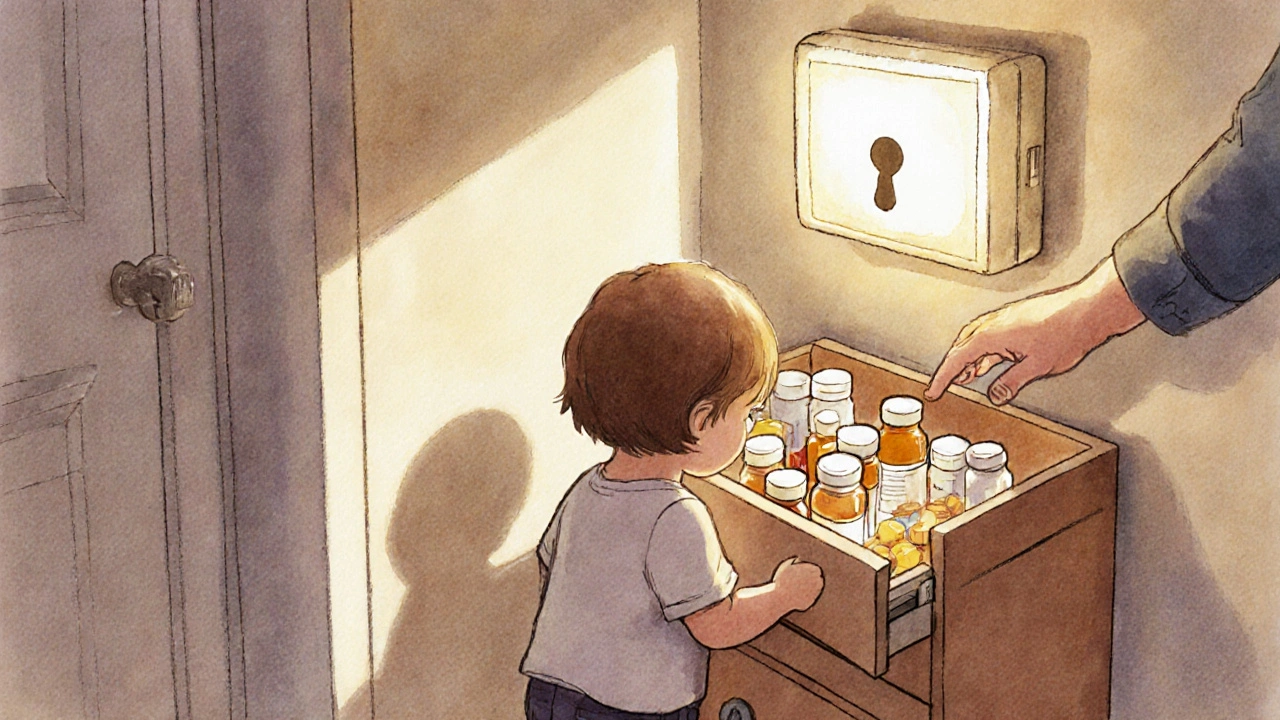
Learn how to use a medication lockbox to safely store high-risk drugs like opioids and benzodiazepines at home. Prevent accidental poisonings, misuse, and theft with proven, expert-recommended steps.
More