
When we talk about decibel levels, a logarithmic unit used to measure the intensity of sound. Also known as dB, it tells you not just how loud something is, but how much damage it can do over time. A whisper is around 30 dB. A normal conversation hits 60 dB. But turn up your headphones to 85 dB? That’s the threshold where prolonged exposure starts hurting your ears. And it’s not just music—construction sites, lawnmowers, and even busy city traffic can push past 90 dB. You don’t need to be at a rock concert to risk hearing loss.
What most people don’t realize is that noise exposure, the total amount of sound energy your ears take in over time matters more than one loud event. Working near a jackhammer for eight hours at 95 dB is just as risky as standing next to a jet engine for a few minutes. Your ears don’t have volume knobs. Once the hair cells in your inner ear get damaged, they don’t grow back. That’s why hearing loss, a permanent reduction in your ability to hear certain frequencies is one of the most common workplace injuries—and it’s often silent until it’s too late.
It’s not just about your ears, either. High sound pressure, the force of sound waves hitting your eardrum has been linked to stress, high blood pressure, and even sleep disruption. Living near an airport or a highway isn’t just annoying—it’s a health hazard. And while you can’t always control your environment, you can control how you respond. Earplugs, noise-canceling headphones, and even simple breaks from loud spaces can make a real difference.
What you’ll find in the articles below isn’t a list of noise facts—it’s a practical guide to recognizing danger before it’s too late. From how loud your blender really is to why your earbuds are quietly stealing your hearing, these posts give you the tools to protect yourself without giving up the sounds you love. No jargon. No scare tactics. Just clear, real-world advice on how to live safely in a noisy world.
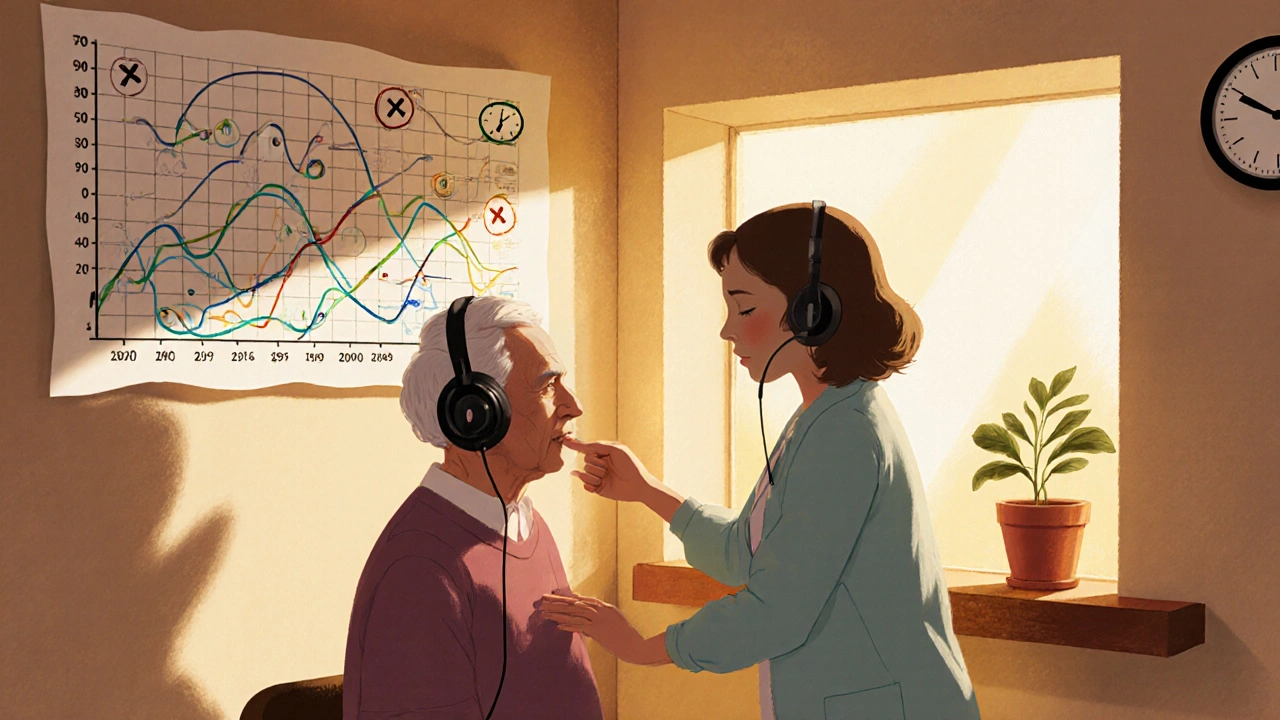
Audiometry testing measures your hearing sensitivity using decibel levels across frequencies. Learn how pure-tone and speech tests detect hearing loss, differentiate between conductive and sensorineural types, and guide treatment like hearing aids.
More