
When you or a loved one is over 65, it’s common to take multiple medications for different conditions. But deprescribing seniors, the intentional process of reducing or stopping medications that are no longer needed or may be harmful. Also known as medication tapering, it’s not about stopping all drugs—it’s about removing the ones that don’t help anymore or could cause more trouble than they solve. Many seniors end up on 5, 10, or even more prescriptions. That’s called polypharmacy, the use of multiple medications by a patient, often leading to increased risk of side effects and interactions. And it’s not always because doctors are overprescribing—it’s often because each specialist focuses on one problem without seeing the whole picture. A pill for blood pressure, another for arthritis, a sleep aid, a stomach reducer, a cholesterol drug… they add up fast. And over time, some of those pills stop being useful but keep getting refilled.
Why does this matter? Because older bodies process drugs differently. Kidneys and liver slow down. Muscle mass drops. Brain sensitivity increases. A dose that was fine at 50 might cause dizziness, confusion, or falls at 80. Some medications—like sleeping pills, anticholinergics, or long-term benzodiazepines—have been linked to memory loss and higher fall risk. Even common drugs like proton pump inhibitors (PPIs) for heartburn, taken for years, can lead to bone loss or infections. geriatric medications, drugs specifically used in older adults that require special dosing or monitoring due to age-related changes in the body aren’t always designed with long-term use in mind. And when side effects show up, instead of asking if the drug is still needed, another pill is often added to treat the side effect. That’s how the cycle keeps growing.
Deprescribing isn’t about quitting cold turkey. It’s a slow, careful process guided by a doctor or pharmacist who knows your full history. It means looking at each medication: Is it still helping? Could it be replaced with something safer? Is the benefit still worth the risk? Some drugs can be lowered in dose. Others can be stopped entirely if the condition they were treating has improved or is no longer active. For example, if your blood pressure has stabilized with lifestyle changes, maybe you don’t need that second pill anymore. Or if you’ve been on a painkiller for years but your arthritis hasn’t gotten worse, maybe it’s time to try non-drug options first. The goal isn’t fewer pills for the sake of it—it’s better health, fewer falls, clearer thinking, and more energy for the things you actually enjoy.
You’ll find real stories and practical advice in the posts below. From how to spot dangerous drug combinations to how to talk to your doctor without sounding like you’re challenging their judgment, these articles give you the tools to take control. You’ll learn what questions to ask, what red flags to watch for, and how to work with your care team to simplify your regimen safely. This isn’t theoretical. It’s happening in homes and clinics every day. And it can make a real difference in how you feel tomorrow.
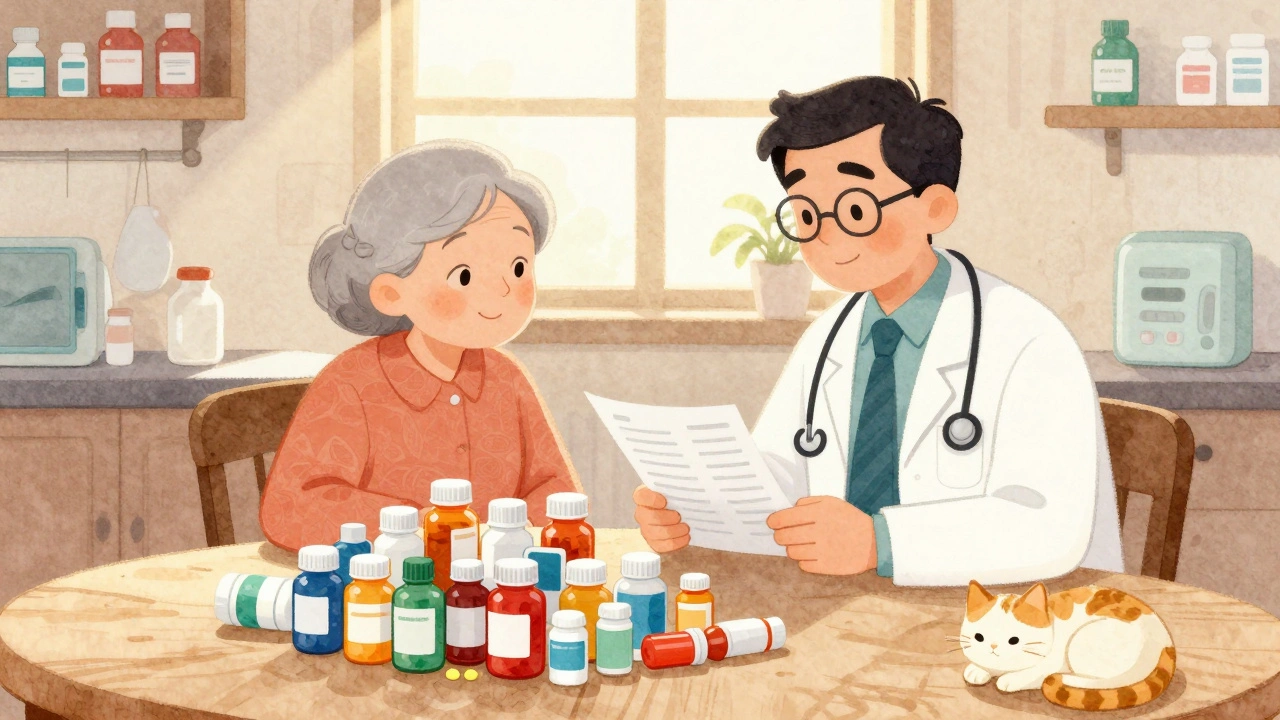
Many seniors take too many medications that no longer help-or may even harm them. Learn when and how to safely stop or reduce drugs through deprescribing, a proven way to improve safety, reduce side effects, and boost quality of life.
More