
When you dispose medications safely, the proper way to remove unused or expired drugs from your home to prevent harm. Also known as safe drug disposal, it’s not just about cleaning out your medicine cabinet—it’s about stopping accidental poisonings, preventing misuse, and keeping toxic chemicals out of water supplies. Every year, millions of unused pills end up in toilets, trash cans, or drawers where kids and pets can reach them. The CDC reports that over 60% of people keep old medications at home, and nearly half say they’ve never thought about how to get rid of them. That’s a problem.
Flushing pills down the toilet or tossing them in the regular trash doesn’t solve anything—it just moves the danger. Water treatment plants can’t filter out most drugs, so chemicals from antidepressants, painkillers, and antibiotics end up in rivers and lakes. Meanwhile, thieves and curious teens raid medicine cabinets looking for pills to abuse. The medication lockbox, a secure container used to store high-risk drugs like opioids and benzodiazepines helps keep them out of reach while you’re still using them. But once you’re done, you need to get rid of them the right way. That’s where drug take-back programs, official collection events or drop-off sites run by pharmacies or law enforcement come in. These are the only truly safe options for most medications. The DEA runs National Prescription Drug Take Back Days twice a year, and many pharmacies like Walgreens and CVS have permanent drop boxes. If you can’t find one, the FDA says you can mix pills with dirt, coffee grounds, or cat litter, seal them in a plastic bag, and throw them in the trash—never in the recycling.
Some drugs, like fentanyl patches or certain opioids, are dangerous enough that the FDA says you should flush them if no take-back option is available. But that’s the exception, not the rule. Most common meds—antibiotics, blood pressure pills, thyroid meds, even expired ibuprofen—should go through a take-back program. And don’t forget about empty containers. Remove or scratch out personal info before recycling them. This isn’t just about following rules. It’s about protecting your neighbor’s child, your aging parent, your local wildlife, and yourself from accidental overdose or long-term environmental damage. The posts below show you exactly how to handle different kinds of meds, what to do if you live in a rural area with no drop-off sites, how to store drugs safely until disposal, and why expired drugs like warfarin or lithium can turn deadly if not handled right. You’ll find real advice from people who’ve been there, and tools to make this easy—no guesswork, no risk.
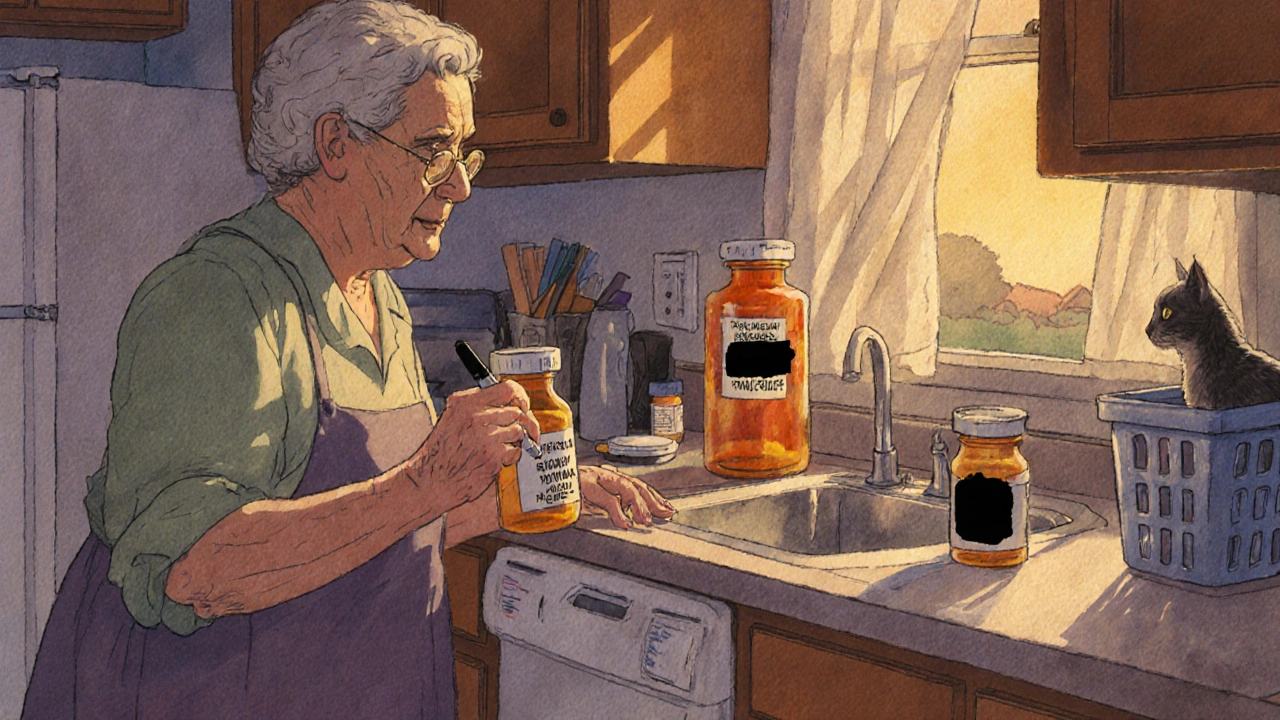
Learn how to safely dispose of old medications while protecting your personal information from identity theft. Follow FDA and HIPAA guidelines for destroying prescription labels and using take-back programs.
More