
When you have high-risk medications like opioids, benzodiazepines, or strong painkillers in your house, a family overdose plan, a clear, written strategy to prevent and respond to accidental medication poisonings isn’t optional—it’s life-saving. It’s not just about locking up pills. It’s about knowing who might be at risk, what to do if someone takes too much, and how to act before it’s too late. This plan works for kids who find medicine by accident, older adults who mix up doses, or teens who experiment without understanding the danger.
A medication lockbox, a secure, child-resistant container designed to store dangerous drugs out of reach is the first line of defense. But even the best lockbox won’t help if no one knows how to use it or what to do after a mistake. That’s why your plan needs clear steps: where the key is kept, who’s responsible for checking it, and how to spot early signs of overdose—like slow breathing, confusion, or unresponsiveness. And if things go wrong, you need to know how to call for help fast. In many cases, giving naloxone (Narcan) can reverse an opioid overdose and buy critical minutes until paramedics arrive. Keeping naloxone on hand, knowing how to use it, and making sure everyone in the household knows where it is, turns a panic moment into a manageable emergency.
It’s not just about opioids. Even common medications like sleep aids, anxiety pills, or muscle relaxants can cause serious harm if taken in the wrong amount or mixed with alcohol. A childproof medicine, a system of storage, labeling, and supervision to prevent accidental ingestion by children isn’t just for toddlers. Teens often grab pills from unsecured cabinets, and seniors might accidentally double-dose because labels are faded or pills look alike. Your plan should include a monthly check of all meds—throw out expired ones, group similar drugs in labeled containers, and keep a written list of what everyone takes and why. This reduces confusion and cuts down on dangerous interactions.
Real families don’t wait for a crisis to make a plan. They talk about it before anything happens. They keep naloxone near the front door, not tucked in the back of a medicine cabinet. They teach kids that pills aren’t candy, even if they look like M&Ms. They know the poison control number by heart. And they don’t feel ashamed to ask for help. The posts below show you how real people are doing this—how one parent used a lockbox to stop their teen from misusing painkillers, how a grandparent’s care team set up a daily pill schedule to avoid mix-ups, and how emergency responders are training families to act in under 90 seconds. You don’t need to be a doctor to save a life. You just need to be ready.
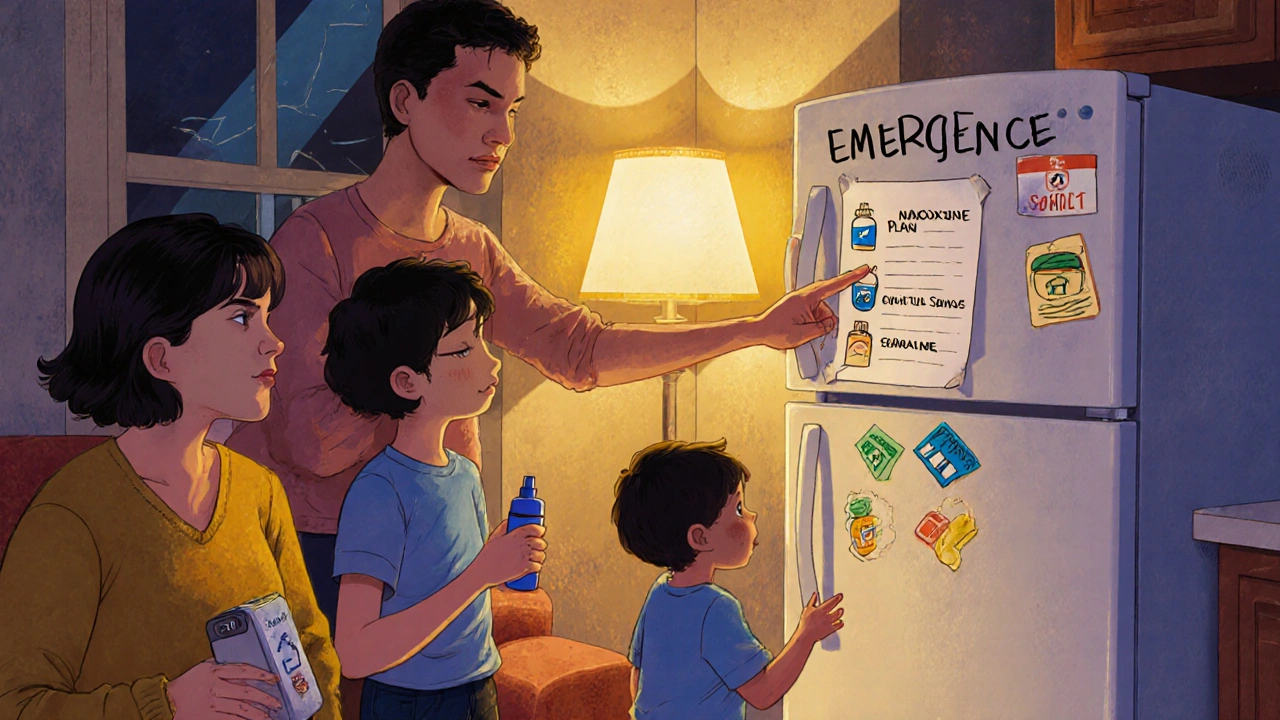
Learn how to create a family overdose emergency plan with naloxone, recognize opioid overdose signs, and respond quickly to save a life. Essential for households with prescription pain meds.
More