
When it comes to geriatric drug safety, the practice of managing medications in older adults to prevent harm, avoid dangerous interactions, and account for changes in how the body processes drugs. Also known as senior medication safety, it’s not just about giving the right pill—it’s about understanding how aging changes everything from kidney function to brain sensitivity. People over 65 make up just 16% of the U.S. population but take nearly 30% of all prescription drugs. That’s not because they’re sick more often—it’s because they’re often on five, six, or even ten medications at once.
This is where polypharmacy, the use of multiple medications by a single patient, often more than are clinically necessary. Also known as medication overload, it’s a silent crisis in aging populations. A 72-year-old with arthritis, high blood pressure, diabetes, and depression might be taking a statin, a diuretic, an antidepressant, a painkiller, and a blood thinner—all with different instructions, side effects, and risks. Mix them together, and you’ve got a recipe for dizziness, falls, confusion, or even kidney failure. The body doesn’t process drugs the same way at 70 as it did at 40. Liver and kidney function slow down. Fat increases, muscle decreases. That means drugs stick around longer, build up in the system, and hit harder.
And it’s not just the pills themselves—it’s how they talk to each other. drug interactions, when two or more medications affect each other’s strength, timing, or side effects. Also known as medication clashes, they’re often invisible until someone ends up in the ER. A common blood pressure drug might make a dementia medication too strong. An OTC sleep aid could turn a heart rhythm drug into a danger. Even something as simple as grapefruit juice can turn a cholesterol pill into a toxic dose. Many seniors don’t realize their supplements—vitamin D, fish oil, St. John’s wort—are also drugs with real risks.
What makes this even trickier is that symptoms of bad drug reactions often look like normal aging. Forgetfulness? Maybe it’s the anticholinergic in that allergy pill. Falls? Could be the sedative from last night’s sleep aid. Low energy? Maybe it’s the combo of a diuretic and a beta-blocker draining potassium. Doctors miss it. Family members miss it. Patients themselves think it’s just "getting older."
But it doesn’t have to be this way. Geriatric drug safety isn’t about cutting pills—it’s about smart choices. It’s asking: Do we still need all these? Is there a safer alternative? Are we monitoring for side effects? Can we simplify the schedule? The posts below give you real, practical answers. You’ll find clear breakdowns of which drugs are riskiest for seniors, how to spot hidden dangers in common prescriptions, what to ask your pharmacist, and how to cut unnecessary meds without hurting your health. No fluff. Just what works for older adults trying to stay safe, strong, and independent.
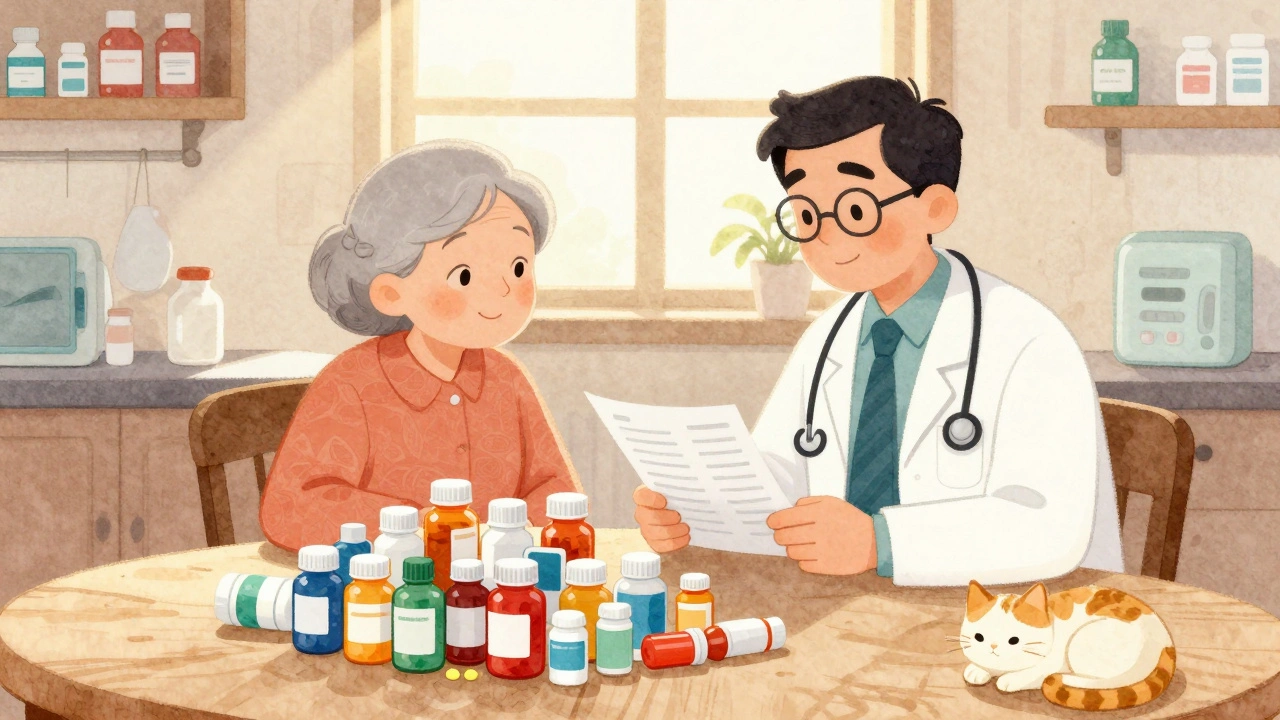
Many seniors take too many medications that no longer help-or may even harm them. Learn when and how to safely stop or reduce drugs through deprescribing, a proven way to improve safety, reduce side effects, and boost quality of life.
More