
When you struggle to follow conversations in noisy rooms, turn up the TV too loud, or hear ringing in your ears, it might be time for a hearing assessment, a clinical test that measures how well your ears and brain process sound. Also known as an audiology evaluation, it’s not just about checking if you can hear a beep—it’s about understanding how hearing loss affects your daily life, balance, and even your mental health.
A hearing assessment often includes an audiogram, a graph that shows your hearing sensitivity across different frequencies, which helps doctors spot patterns—like high-frequency loss from aging or noise exposure. It may also involve tests for tinnitus, the persistent ringing or buzzing in the ears that often accompanies hearing damage, or checks for inner ear problems linked to vestibular therapy, a set of exercises used to treat dizziness and balance disorders. These aren’t separate issues—they’re connected. The same inner ear structures that help you hear also help you stay upright. When one goes wrong, the other often follows.
You don’t need to wait until you’re struggling to get tested. Many people wait years before doing anything, but early detection means better outcomes. A simple hearing test can catch noise-induced damage before it becomes permanent, identify fluid buildup from infections, or reveal early signs of conditions like Meniere’s disease. Even if you think your hearing is fine, a baseline assessment gives you a reference point for future changes. For older adults, it’s not just about missing jokes at dinner—it’s about staying safe, avoiding falls, and keeping your brain active. Studies show untreated hearing loss is linked to faster cognitive decline.
What you’ll find in the posts below are real, practical guides on what happens during a hearing assessment, how to interpret the results, what to do if you’re told you need a hearing aid, and how conditions like tinnitus or dizziness tie into your ear health. You’ll learn how to talk to your doctor about symptoms you’ve been ignoring, why some medications affect hearing, and how balance exercises can help even if your main issue isn’t volume—it’s clarity. This isn’t just about ears. It’s about staying connected, staying safe, and taking control before small changes become big problems.
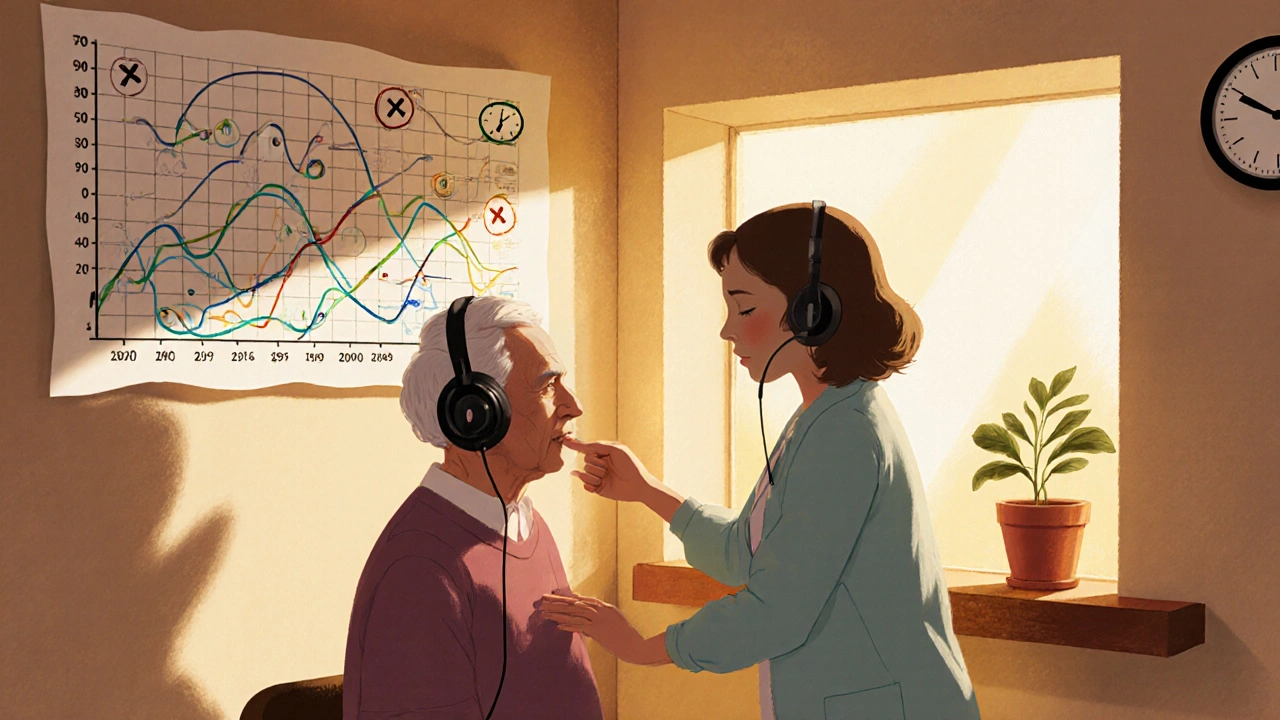
Audiometry testing measures your hearing sensitivity using decibel levels across frequencies. Learn how pure-tone and speech tests detect hearing loss, differentiate between conductive and sensorineural types, and guide treatment like hearing aids.
More