
When your heart rhythm, the pattern of electrical signals that control how your heart beats. Also known as cardiac rhythm, it's meant to be steady and regular. But when it skips, races, or stumbles, it’s called an arrhythmia, an abnormal heartbeat that can be harmless or life-threatening. Not every irregular beat is dangerous—but some, like those caused by QT prolongation, a delay in the heart’s electrical recovery phase that can trigger dangerous rhythms, need serious attention. And it’s not just old age or genetics—many common medications can quietly mess with your heart’s timing.
Take heart rhythm and antidepressants. Drugs like citalopram and escitalopram help with depression, but at higher doses, they can stretch out the QT interval on an ECG. That’s not just a lab result—it’s a warning sign. People with existing heart conditions, low potassium, or those taking other QT-affecting meds are at higher risk. Then there’s heart failure, where diuretics, water pills used to remove excess fluid are lifesavers—but they often drain potassium too fast, leading to hypokalemia, dangerously low potassium levels that can trigger arrhythmias. Even over-the-counter cold meds or herbal supplements can interfere. It’s not about avoiding medicine—it’s about knowing what’s in your body and how it talks to your heart.
What you’ll find here isn’t just theory. These are real stories from people managing heart rhythm risks while taking meds for depression, diabetes, high blood pressure, or chronic pain. You’ll learn which drugs carry hidden cardiac risks, how to spot early signs of trouble, and what steps you can take to stay safe without giving up your treatment. Whether you’re on a daily pill or just starting a new course, this collection gives you the facts you need to ask the right questions and protect your heartbeat.
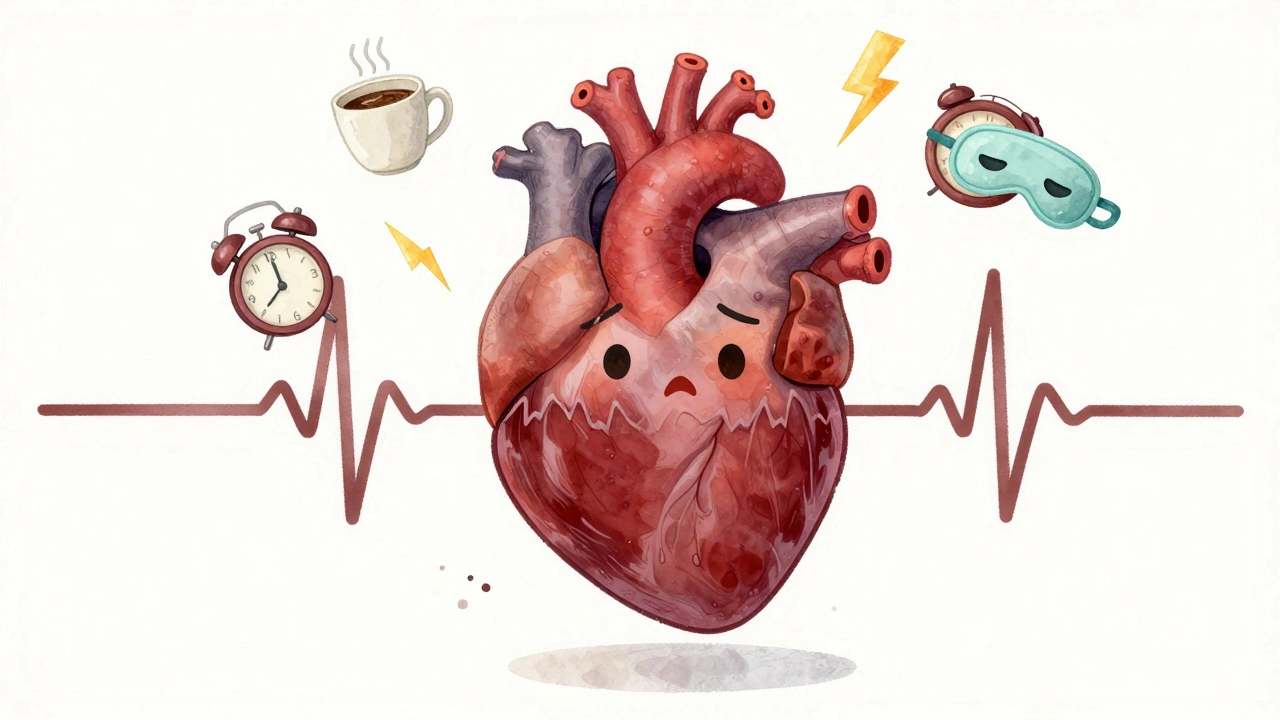
Learn what causes irregular heartbeats, how to recognize symptoms, and what treatments actually work. From common triggers like caffeine to serious conditions like atrial fibrillation, get clear, practical info to know when to act.
More