
When you dispose of old medications, you’re not just clearing out a medicine cabinet—you’re following rules designed to protect your HIPAA, a federal law that safeguards patient health information, including prescription records. Also known as Health Insurance Portability and Accountability Act, it doesn’t directly tell you how to throw out pills, but it shapes how pharmacies, hospitals, and even your own home must handle drug waste to keep personal data secure. That’s why simply tossing a bottle of painkillers in the trash or flushing them down the toilet isn’t just unsafe—it can violate privacy and environmental rules.
Medication disposal isn’t just about the drug itself. It’s about pharmaceutical waste, unused or expired drugs that can harm people and the environment if not handled properly. Think of opioid pain meds, psychiatric drugs, or even antibiotics. If a child finds them, a thief steals your bottle, or they leach into water supplies, the consequences are real. That’s why the FDA drug disposal, the official guidelines from the U.S. Food and Drug Administration on how to safely discard medications recommends using take-back programs first. These are drop boxes at pharmacies, police stations, or community events—places where your old meds are collected and destroyed under strict controls that keep your identity private.
But what if there’s no take-back program nearby? You can still dispose of meds safely at home, but you must follow the right steps. Remove pills from their original bottles—those labels contain your name, doctor’s name, and prescription number, all protected under HIPAA. Scrape off or black out that info. Mix the pills with something unappetizing like coffee grounds or cat litter. Put them in a sealed bag and toss them in the trash. Never leave bottles with personal info lying around. For patches like fentanyl or nicotine, fold them in half with the sticky sides together, then throw them away. Syringes? Never put them loose in the trash—use a sharps container, which many pharmacies sell or give out for free.
Some people think flushing is okay because the FDA lists a few drugs that are dangerous if misused and should be flushed immediately. That list is tiny—less than 1% of all medications. For everything else, flushing pollutes water and breaks environmental rules. And while mail-back programs exist, they’re often expensive or hard to find. The easiest, most legal path is always the nearest drug take-back location.
What you’ll find in the articles below aren’t just instructions—they’re real-world guides from people who’ve dealt with this exact problem. You’ll learn how to lock up high-risk drugs before disposal, how to talk to your pharmacist about take-back options, why expired medications with narrow therapeutic indexes need special handling, and how to create a family plan that keeps meds out of the wrong hands. This isn’t about bureaucracy. It’s about safety, privacy, and doing the right thing without overcomplicating it.
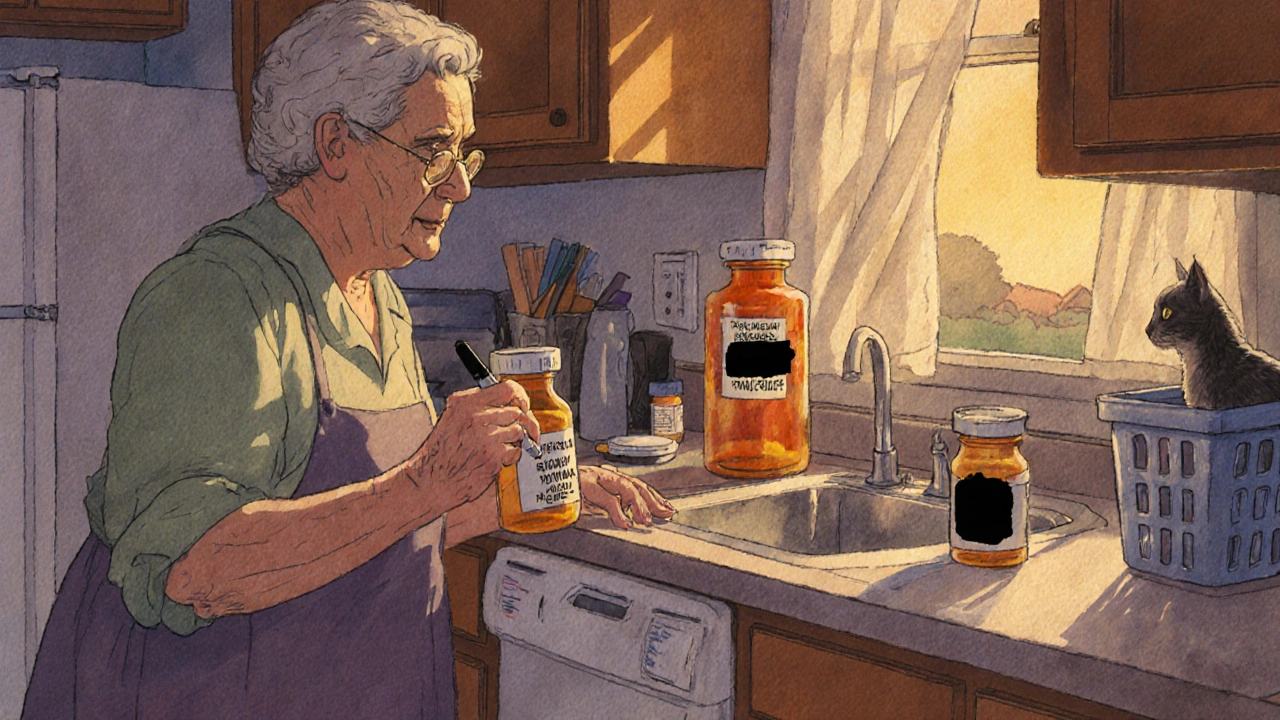
Learn how to safely dispose of old medications while protecting your personal information from identity theft. Follow FDA and HIPAA guidelines for destroying prescription labels and using take-back programs.
More