
When your blood potassium drops too low, you’re dealing with hypokalemia, a condition where potassium levels fall below 3.5 mmol/L, disrupting nerve and muscle function. Also known as low potassium, it’s not just a lab number—it’s something that can make you feel tired, weak, or even cause your heart to skip beats. Potassium isn’t just for athletes or bananas; it’s a silent conductor for your muscles, nerves, and heart rhythm. Even small drops can throw off your body’s balance, especially if you’re on diuretics, have chronic diarrhea, or take certain antibiotics.
It often shows up quietly—maybe you’ve been cramping more than usual, or you feel unusually tired after walking the dog. But it can also sneak in with bigger signs: palpitations, constipation, or numbness. People with kidney disease, eating disorders, or those on long-term laxative use are at higher risk. And here’s the thing: electrolyte imbalance, a broader disruption of minerals like sodium, calcium, and magnesium that work with potassium often hides in plain sight. Many don’t realize their muscle twitching or fatigue is tied to potassium, not stress or aging.
What makes hypokalemia tricky is that it rarely shows up alone. It’s often linked to other conditions—like potassium deficiency, a chronic state where intake doesn’t match loss, often from poor diet or excessive fluid loss, or side effects from blood pressure meds like hydrochlorothiazide. Some people fix it with dietary tweaks—adding spinach, potatoes, or beans. Others need supplements, but not always. Too much potassium can be just as dangerous, which is why doctors test before prescribing.
The posts here aren’t just about hypokalemia in isolation. They show how it connects to real-world meds—like diuretics, muscle relaxants, and blood pressure drugs—that can drain potassium. You’ll find stories from people who figured out their fatigue was tied to low potassium after years of guessing. Others share how they managed side effects from medications that quietly lowered their levels. There’s no fluff here—just clear, practical info from people who’ve been there and experts who’ve seen the patterns.
If you’ve ever wondered why you’re always tired, or why your doctor checked your potassium after you started a new pill, this collection has answers. You’ll learn what to ask your doctor, how to spot hidden causes, and what really works to bring levels back—without guessing or risking more problems.
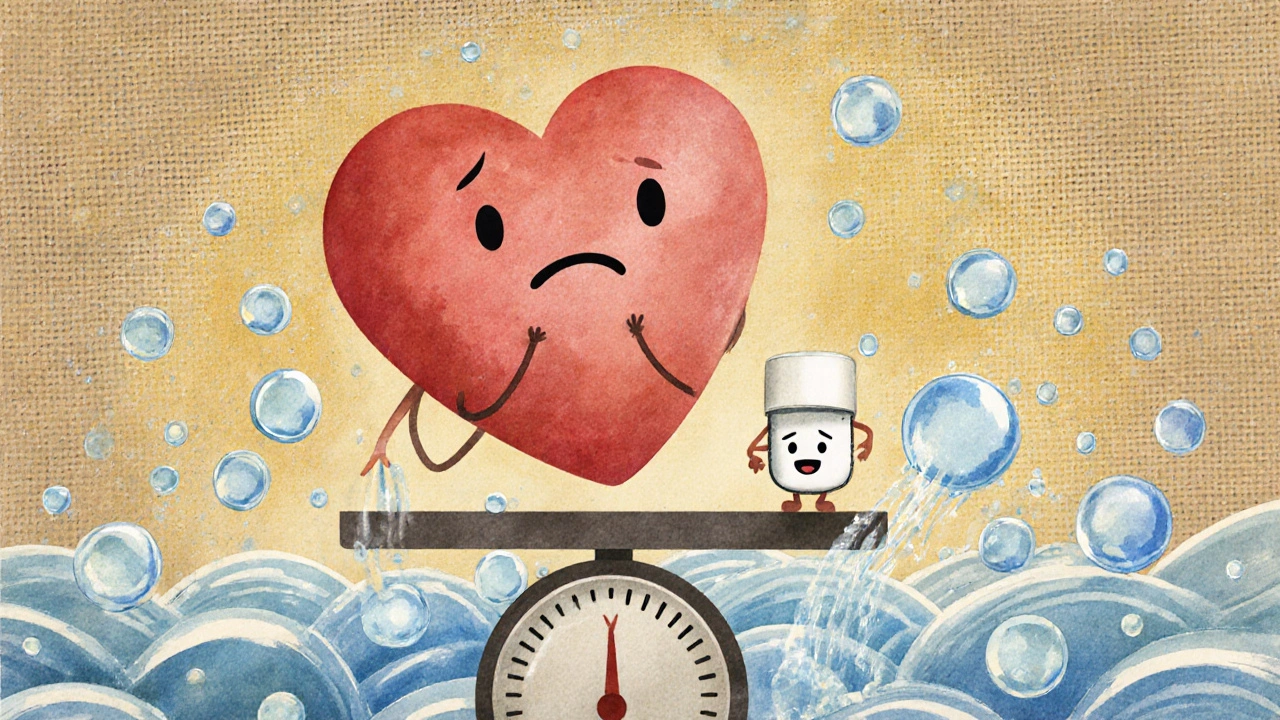
Diuretics help manage fluid in heart failure but often cause dangerous low potassium. Learn how to prevent and treat hypokalemia with proven strategies like MRAs, SGLT2 inhibitors, and smart monitoring.
More