
When we talk about LDL reduction, the process of lowering low-density lipoprotein cholesterol, often called "bad" cholesterol. Also known as bad cholesterol lowering, it’s one of the most direct ways to protect your heart and avoid heart attacks or strokes. High LDL doesn’t just sit in your blood—it builds up in your arteries, narrows them over time, and sets the stage for serious problems. The good news? You don’t need to wait for a crisis to act. Many people lower their LDL by 30% to 50% using a mix of simple changes and proven medications.
Statins, a class of drugs that block cholesterol production in the liver. Also known as HMG-CoA reductase inhibitors, they’re the most common first step for people with high LDL. But they’re not the only tool. Lifestyle changes, including diet, exercise, and weight management. Also known as cardiovascular lifestyle interventions, they can cut LDL by 10% to 20% on their own—and boost statin results when used together. You’ll see this combo in posts about diabetes and heart disease, where GLP-1 RAs and statins work side by side to slash risk. And it’s not just about pills. Foods high in soluble fiber—like oats, beans, and apples—bind cholesterol in your gut and flush it out. Omega-3s from fish, plant sterols in fortified foods, and even daily walking can add up. What matters isn’t perfection; it’s consistency.
Some people worry statins raise blood sugar or cause muscle pain. Others wonder if they need to avoid eggs or butter entirely. The truth? For most, the heart protection from lowering LDL far outweighs the small risks. You don’t need to be a nutrition expert or a gym rat. Just start small: swap white bread for whole grain, take a 20-minute walk after dinner, or ask your doctor if your LDL number is where it should be. The posts below cover real stories and science behind these steps—from how diuretics affect heart patients to why some people need to monitor potassium levels while managing cholesterol. You’ll find practical advice on medications, diet tweaks, and how to talk to your doctor about side effects. No fluff. No guesswork. Just what works.
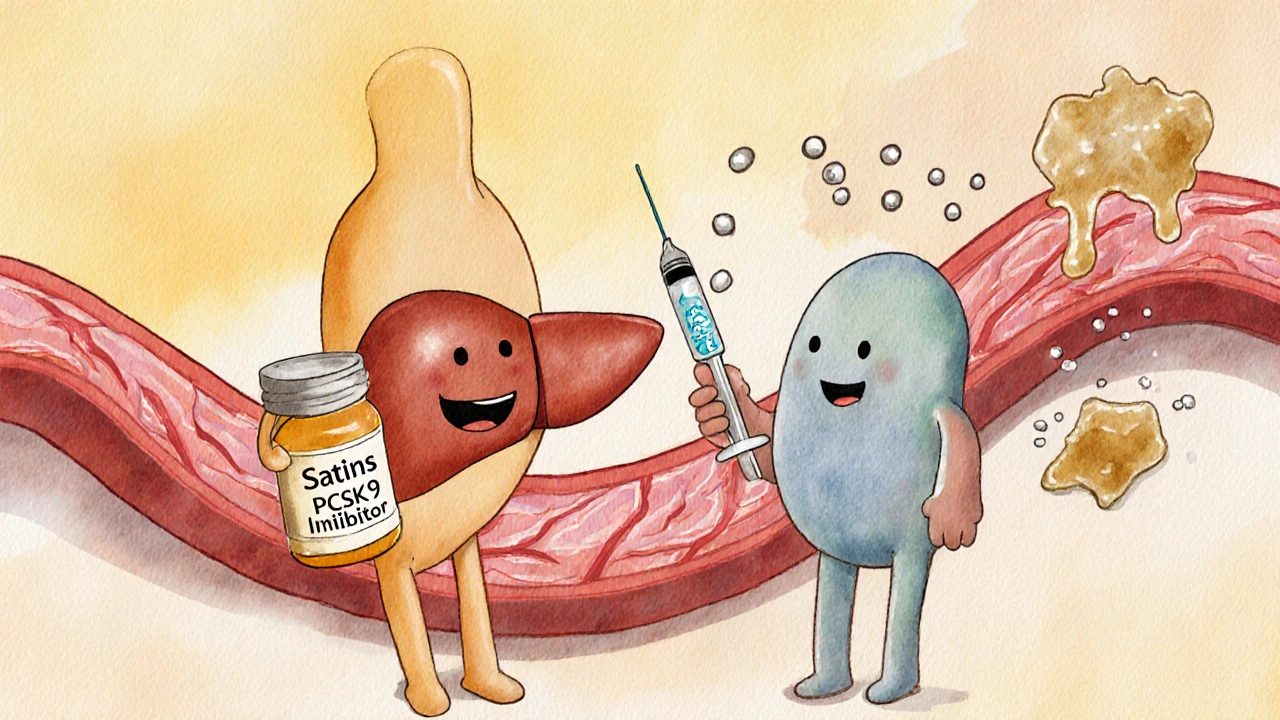
PCSK9 inhibitors and statins both lower LDL cholesterol, but differ in effectiveness, side effects, and cost. Statins are first-line for most, while PCSK9 inhibitors offer powerful alternatives for those with intolerance or very high risk.
More