
When you're living on a tight budget, paying for prescriptions shouldn't mean skipping meals or heat. Low-income drug assistance, programs designed to help people with limited income get essential medications at low or no cost. Also known as patient assistance programs, these are offered by drug makers, nonprofits, and government agencies to keep people on their treatments. It's not a secret system—thousands of people use it every day to get insulin, heart meds, asthma inhalers, and more without going broke.
Many of these programs work with prescription drug manufacturers, companies that produce brand-name and generic medicines. Companies like Pfizer, Merck, and Eli Lilly run their own aid programs for people who can't afford their drugs—even if they have insurance but face high copays. You don’t need to be completely uninsured to qualify. If your income is below 400% of the federal poverty level, you’re often eligible. Some programs even help people on Medicare Part D who hit the coverage gap, also called the donut hole.
Then there’s state pharmaceutical assistance programs, government-run help for residents who meet income and age requirements. These vary by state—some cover a wide range of drugs, others focus on seniors or people with chronic conditions like diabetes or hypertension. You can find yours through your state’s health department or by calling 211, a free national helpline that connects people to local resources. Don’t assume you’re not eligible because you work part-time or get food stamps. Many programs don’t count those benefits when calculating income.
What about generics? They’re cheaper, sure—but even generics can be too expensive if you’re paying out of pocket. That’s where pharmacy discount cards, free or low-cost tools that lower prices at the counter come in. Programs like GoodRx or NeedyMeds aren’t insurance, but they often give you prices lower than your insurance copay. You can print them, save them on your phone, or ask your pharmacist to use them at checkout. Some even work for pets.
And it’s not just about getting the meds—it’s about staying on them. Skipping doses because you can’t afford refills leads to hospital visits, which cost way more. That’s why many of the articles here focus on practical ways to manage chronic conditions without breaking the bank: switching to generics safely, using automated refills, understanding refill limits, and knowing how to report side effects without fear. These aren’t theoretical tips—they’re tools real people use every day to stay healthy on a budget.
If you’ve ever stared at a prescription bottle wondering how you’ll pay for the next one, you’re not alone. The system is confusing, but help exists. You just need to know where to look. Below, you’ll find real advice from people who’ve been there—how to talk to your doctor about costs, how to find free or low-cost clinics, how to avoid expired or unsafe meds when money’s tight, and how to protect your privacy when disposing of old prescriptions. This isn’t about charity. It’s about access. And you deserve it.
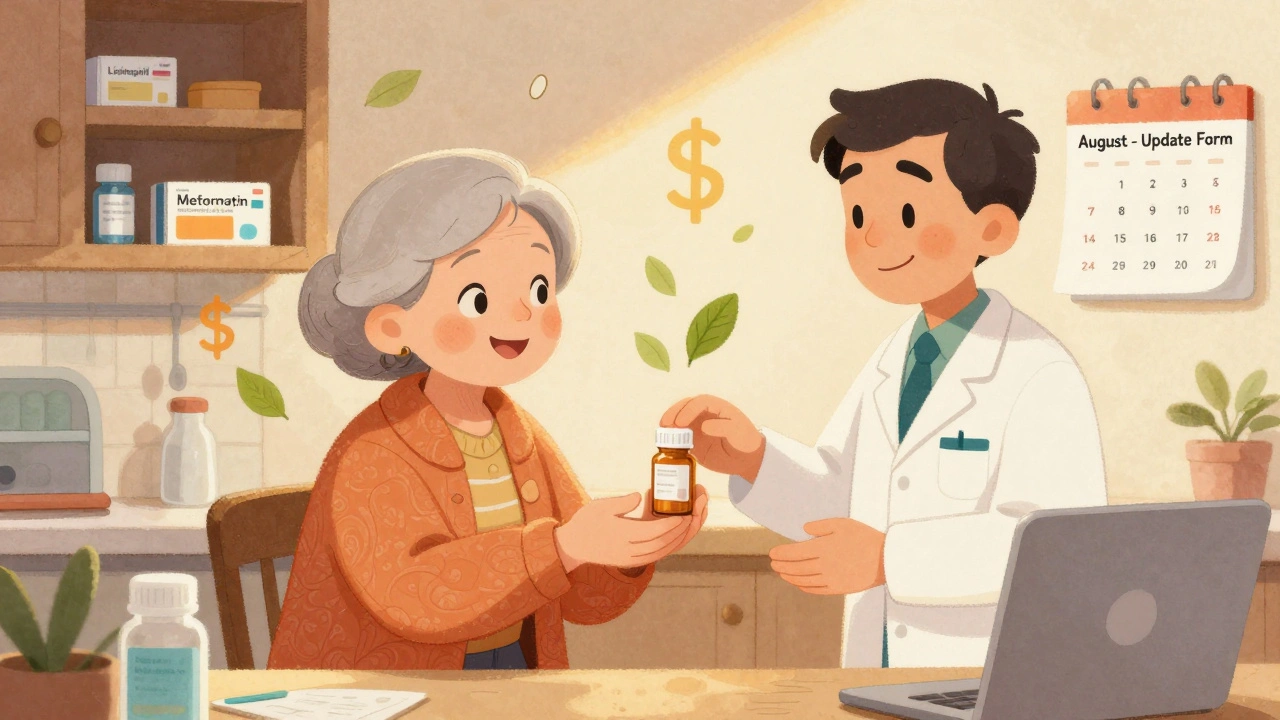
Medicare Extra Help cuts generic prescription costs to $4.90 per fill and eliminates premiums and deductibles. Learn who qualifies, how to apply, and how to keep your benefits in 2025.
More