
When you fill a prescription or visit a doctor under Medicare copay, a fixed amount you pay at the point of care, separate from your monthly premium. Also known as cost-sharing, it’s how Medicare shifts part of the expense to you—so the program stays affordable for everyone. It’s not a percentage of the bill. It’s not a deductible. It’s a flat fee: $10 for a generic, $45 for a brand-name drug, $20 for a doctor’s visit. Simple. But confusing when it adds up.
Medicare copay isn’t the same across all parts of Medicare. Medicare Part D, the prescription drug coverage. Also known as Medicare drug plans, it’s where most people see copays most often. Each plan sets its own copay tiers. Tier 1 might be $5 for generics. Tier 4 could be $100 for specialty drugs. And if you hit the coverage gap—what people call the donut hole—you’ll pay more until you hit catastrophic coverage. Meanwhile, Medicare Part B, which covers doctor visits and outpatient care. Also known as medical insurance, it often uses coinsurance instead of copays—but some plans, especially Medicare Advantage, switch to fixed copays to simplify costs. That’s why two people on Medicare can pay wildly different amounts for the same drug or visit. It all depends on the plan.
What drives your copay? It’s not just your plan. It’s whether the drug is generic or brand-name. It’s whether your doctor is in-network. It’s whether you’ve hit your out-of-pocket maximum yet. And it’s whether you’re using a preferred pharmacy. Some plans offer $0 copays for generics if you order through their mail-order service. Others charge more if you walk into a pharmacy that’s not on their list. You don’t have to guess. Every plan has a formulary—a list of covered drugs—and a cost-sharing schedule. You can find it online, in the mail, or ask your pharmacist to print it for you.
People often think Medicare covers everything. It doesn’t. Copays are built in. But they don’t have to break you. If you’re paying more than $50 a month in copays for meds, check if you qualify for Extra Help—a federal program that cuts Part D costs for people with limited income. Some states run additional programs too. And if you’re on multiple medications, ask your doctor about switching to generics. Most chronic condition drugs have them. Same effect. One-tenth the price. That’s not a compromise. That’s smart planning.
And don’t ignore the big picture. Your copay isn’t just about today’s pill. It’s about staying on your meds. Skipping doses because you can’t afford the copay? That leads to hospital visits. And those cost way more. One study found people who skipped their heart meds to save on copays were 3 times more likely to end up in the ER. That’s not saving money. That’s trading short-term cash for long-term risk.
Below, you’ll find real advice from people who’ve been there: how to switch to cheaper generics without losing control of your condition, how to spot hidden costs in your drug plan, how to protect your privacy when disposing of old prescriptions, and how to talk to your doctor when side effects or costs become too much. These aren’t theory pieces. They’re practical, tested tips from folks managing chronic illness, heart disease, diabetes, and more—all while trying to keep their out-of-pocket costs from eating their retirement.
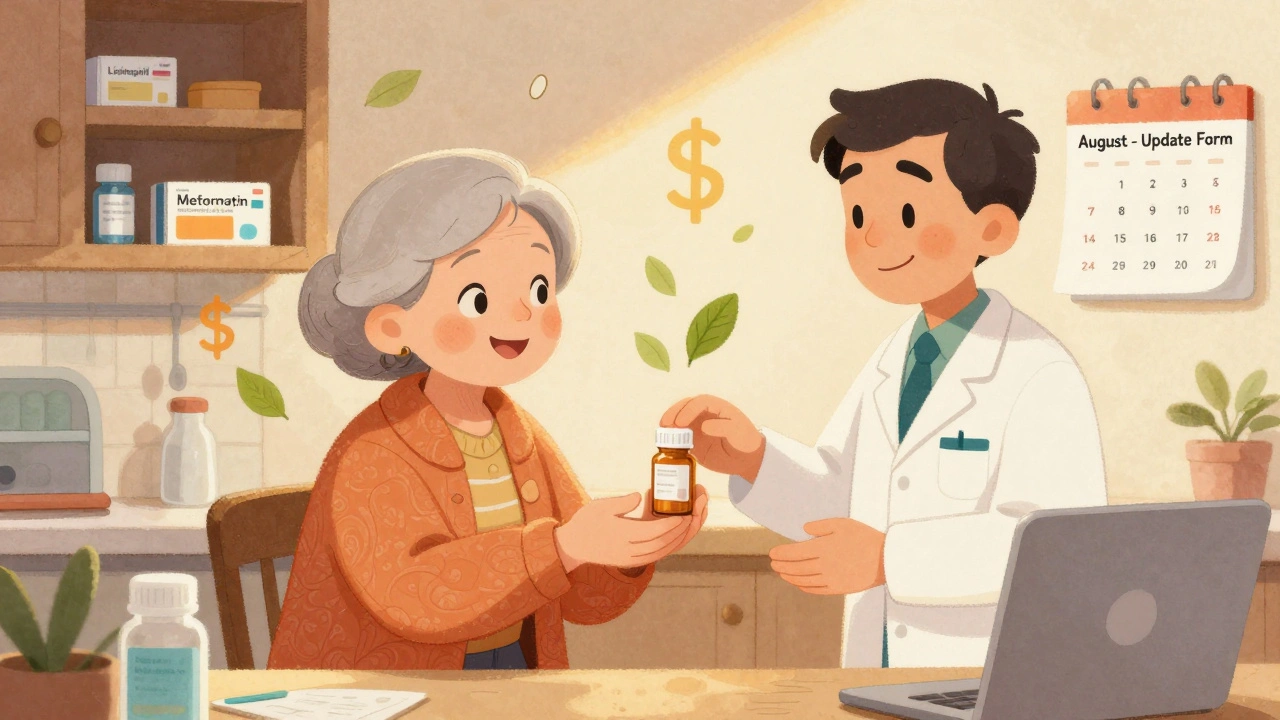
Medicare Extra Help cuts generic prescription costs to $4.90 per fill and eliminates premiums and deductibles. Learn who qualifies, how to apply, and how to keep your benefits in 2025.
More