
When you’re on Medicare Part D, the federal program that helps cover the cost of prescription drugs for people enrolled in Medicare. It’s not just a benefit—it’s a financial lifeline for millions who rely on daily meds for diabetes, heart disease, or arthritis. But too many people sign up without understanding how it really works, end up paying more than they need to, or miss out on help they qualify for.
Medicare Extra Help, a program that lowers out-of-pocket costs for people with limited income can reduce your generic drug copays to just $4.90 per fill and wipe out premiums and deductibles. Yet, nearly half of those who qualify don’t apply. Why? They think it’s too complicated—or they don’t know they’re eligible. The truth? If your income is under $21,500 (or $29,100 for a couple) and your assets are under $16,650 (not counting your home or car), you likely qualify. It’s not a secret program—it’s a right.
Generic medications, lower-cost versions of brand-name drugs that work the same way are the backbone of saving money under Part D. Most plans push generics because they’re cheaper for everyone. But switching isn’t always automatic. Some doctors still write brand-name prescriptions by default. You have to ask. And if your plan changes its formulary mid-year? You might suddenly pay double. That’s why checking your plan’s drug list every fall during Open Enrollment isn’t optional—it’s essential.
And here’s something most people don’t realize: your pharmacy matters. A drug that costs $10 at one pharmacy might cost $45 at another, even with the same Part D plan. That’s because pharmacies negotiate different prices with insurers. Using a mail-order pharmacy or a network like Walmart or Costco can slash your bills by 50% or more. You don’t need a special card—just ask your pharmacist for the cash price before you pay.
Then there’s the donut hole—that gap in coverage where you pay more out of pocket after spending a certain amount. But thanks to recent changes, you now pay only 25% of the cost for both brand-name and generic drugs in the donut hole. Plus, the discounts from drug makers count toward getting you out of it faster. That’s not common knowledge. Most people panic when they hit that gap. You don’t have to.
And if you’re on high-cost drugs like injectables for rheumatoid arthritis or multiple sclerosis? Part D doesn’t cover everything, but you’re not stuck. Programs like manufacturer coupons, patient assistance foundations, and even switching to biosimilars can cut your monthly bill from $3,000 to $300. It takes work, but it’s doable.
Medicare Part D isn’t a one-time setup. It’s a system you need to manage like a budget—checking your plan each year, asking questions, and pushing back when something doesn’t add up. The people who save the most aren’t the ones with the fanciest plans. They’re the ones who know where to look, who to ask, and when to switch.
Below, you’ll find real, practical guides on how to use Part D wisely—how to apply for Extra Help, how to spot hidden costs, how to switch to generics without risking your health, and how to handle expensive specialty drugs without going broke. No fluff. Just what works.
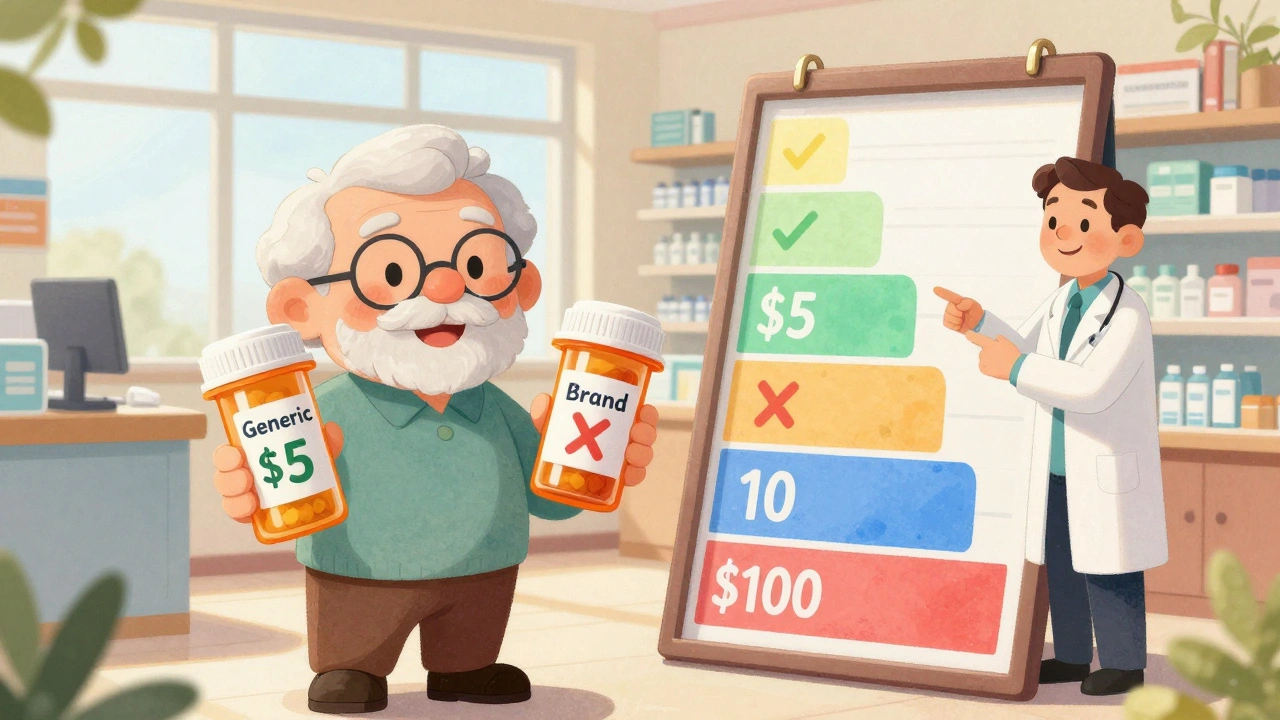
Learn the average 2024 copay costs for generic vs. brand name drugs under Medicare and private insurance. Discover how to save hundreds a year by choosing generics and understanding your plan's tiered system.
More