
When you keep pills in the bathroom cabinet or on the kitchen counter, you’re not just being convenient—you’re risking accidental poisoning, misuse, or theft. A medication lockbox, a secure container designed to store prescription and over-the-counter drugs out of reach. Also known as a medicine safety box, it’s one of the simplest, most effective steps you can take to protect your family. Every year, over 60,000 children under six end up in emergency rooms after swallowing someone else’s pills. And it’s not just kids—teens, visitors, or even well-meaning relatives might grab the wrong bottle if it’s left out. A lockbox isn’t just for homes with children. It’s for anyone who takes multiple medications, has a history of substance use in the household, or just wants to avoid accidental overdoses.
What goes inside? Not just opioids like oxycodone or fentanyl—though those are the most dangerous. Think about your blood pressure pills, anxiety meds like Xanax, sleep aids, or even strong painkillers like hydrocodone. Even common drugs like ibuprofen or antihistamines can cause serious harm if taken in large doses by someone who doesn’t need them. A lockbox keeps all of these together, locked, and labeled. Many models have compartments for different family members, timers to remind you when to take your dose, and even tamper-proof seals. You don’t need a fancy safe—just something sturdy, with a combination or key that only adults know.
Related tools like childproof medicine containers, bottles with safety caps designed to resist opening by young children help, but they’re not foolproof. Kids as young as two can figure out twist caps. A lockbox adds a second layer of protection. And if you’re worried about someone in your home misusing meds, a lockbox gives you control without confrontation. It’s not about distrust—it’s about safety. You wouldn’t leave a loaded gun on the coffee table. Why leave your meds out?
Some people think, "I don’t have kids, so I don’t need one." But what about when your grandchild visits? Or your college-aged kid comes home for break? Or a houseguest stays overnight? Accidents happen fast. A lockbox takes seconds to use and could save a life. It’s also a smart move if you’re traveling with meds—some hotels don’t have safes, and a small lockbox fits in your suitcase.
What you’ll find in the posts below are real stories and practical advice about how people use medication lockboxes, what they’ve learned the hard way, and how to pair this simple tool with other safety habits. You’ll read about managing prescriptions for elderly parents, keeping ADHD meds secure in teen households, and even how to talk to family members about using one. There’s no magic fix for drug safety—but a lockbox is the closest thing to one.
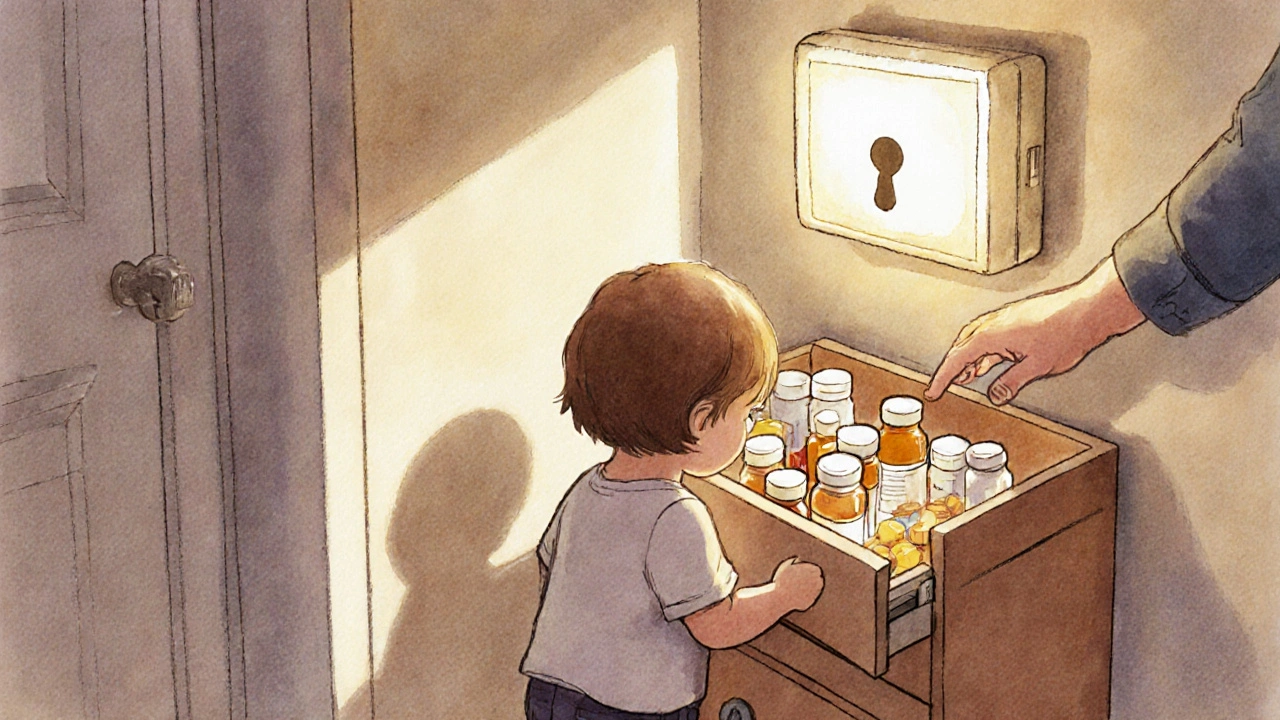
Learn how to use a medication lockbox to safely store high-risk drugs like opioids and benzodiazepines at home. Prevent accidental poisonings, misuse, and theft with proven, expert-recommended steps.
More