
When someone overdoses on opioids, every minute counts. An opioid overdose response, the immediate actions taken to save a life during an opioid overdose, often involving naloxone and emergency care. Also known as opioid reversal protocol, it’s not just for medical professionals—it’s a skill anyone can learn. Opioids slow breathing until it stops. Without help, brain damage or death can happen in minutes. But with the right steps, many overdoses are reversible.
The most critical part of an opioid overdose response, the immediate actions taken to save a life during an opioid overdose, often involving naloxone and emergency care. Also known as opioid reversal protocol, it’s not just for medical professionals—it’s a skill anyone can learn. is recognizing the signs: blue or gray lips, slow or stopped breathing, unresponsiveness, and pinpoint pupils. These aren’t subtle. If someone is slumped over and won’t wake up, don’t assume they’re just asleep. Treat it like an emergency—because it is. naloxone, a medication that rapidly reverses opioid overdose by blocking opioid receptors in the brain. Also known as Narcan, it’s safe, easy to use, and available without a prescription in most places. It works in minutes, and it won’t hurt someone who didn’t take opioids. Keep it where you keep your first aid kit. Many families now keep it on hand, just like an EpiPen.
But naloxone isn’t the whole story. You also need to call 911. Even if naloxone brings someone back, the effects wear off faster than the opioids in their system. They can slip back into overdose. Stay with them until help arrives. Try to keep them awake and on their side—this prevents choking if they vomit. Don’t try to shock them with cold water or caffeine. Those myths can delay real help. And don’t wait to see if they "wake up on their own." By then, it’s often too late.
There’s more to this than just saving one life. overdose prevention, a set of strategies including safe storage, education, and access to reversal drugs to reduce the risk of opioid overdose. Also known as opioid safety, it’s about changing how we handle these medications at home. Lockboxes, clear labeling, and talking openly about risks can stop overdoses before they start. Parents, caregivers, and even friends of people on long-term pain meds should know how to store these drugs safely. And if someone you care about is using opioids—even if they have a prescription—talk to them about naloxone. Make a plan. Practice what to do. It’s not about fear. It’s about being ready.
What you’ll find below are real, practical guides that cover every angle: how to use naloxone correctly, how to talk to doctors about opioid risks, how to lock up high-risk meds at home, and why some people need more than one dose of reversal drug. These aren’t theoretical. They’re based on what works in real emergencies. You won’t find fluff. Just clear steps, expert-backed advice, and tools that could save someone’s life tomorrow.
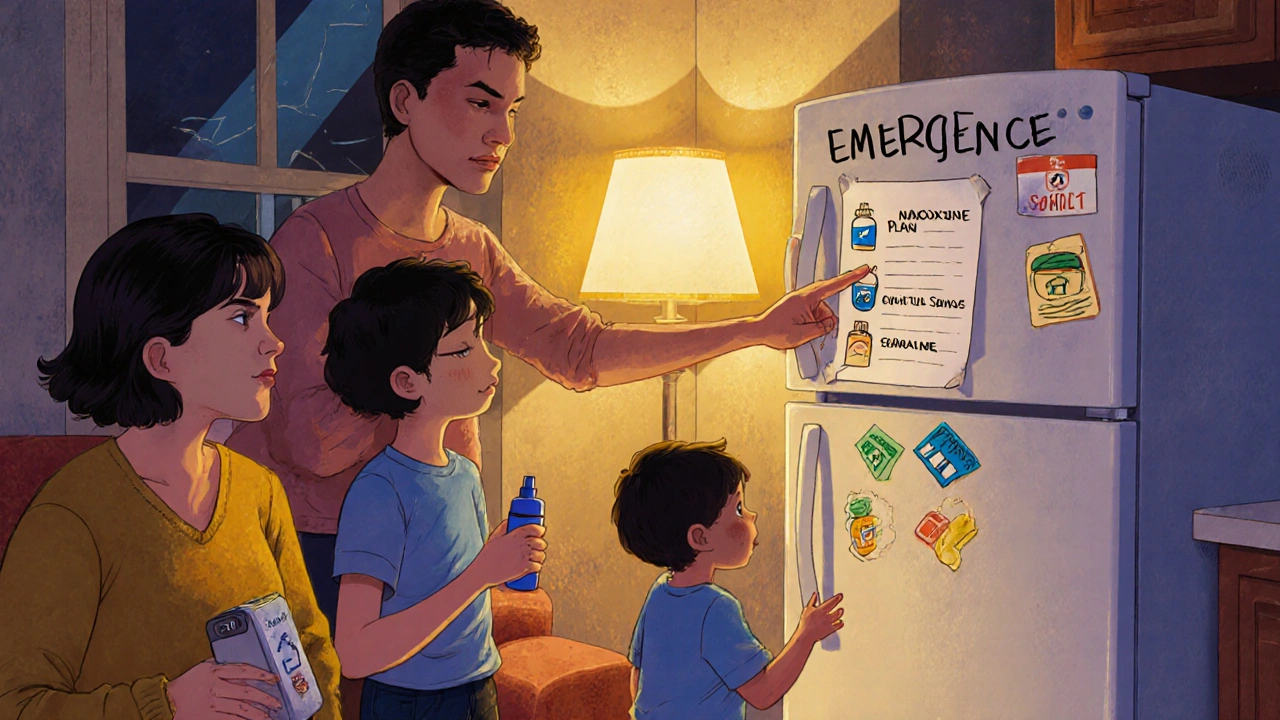
Learn how to create a family overdose emergency plan with naloxone, recognize opioid overdose signs, and respond quickly to save a life. Essential for households with prescription pain meds.
More