
When you grab a bottle of pain reliever, allergy pill, or cough syrup from the shelf, you’re holding more than just medicine—you’re holding a OTC drug facts label, a standardized, government-mandated summary of what’s in the bottle and how to use it safely. Also known as the Drug Facts panel, this label is your only legal guarantee that you’re getting accurate, consistent information—no marketing fluff, no hidden fine print. Unlike prescription labels, which vary by pharmacy and prescriber, every OTC product in the U.S. must follow the same format set by the FDA. That means whether it’s ibuprofen, loratadine, or pseudoephedrine, the layout is always the same: active ingredients first, then uses, warnings, directions, other information, and inactive ingredients. If you’ve ever taken two cold medicines at once and felt weird afterward, you weren’t alone. Most of those cases happen because people didn’t check the OTC drug facts label for overlapping active ingredients.
That’s why understanding the active ingredients, the components in a drug that produce the intended effect is critical. For example, acetaminophen shows up in over 600 products—from Tylenol to NyQuil to Excedrin. Taking more than one product with it can easily push you past the safe daily limit of 4,000 mg, risking liver damage. Same with antihistamines like diphenhydramine: found in Benadryl, Unisom, and many nighttime cold remedies. Combine them, and you might end up dizzy, drowsy, or worse. The warnings section, the part that tells you who shouldn’t take the drug or what conditions make it dangerous isn’t there to scare you—it’s there to stop you from making a mistake you can’t undo. If you have high blood pressure, kidney disease, or are pregnant, those warnings are your lifeline.
And don’t skip the inactive ingredients, the fillers, dyes, and preservatives that help the drug work but don’t treat your symptoms. People with allergies to corn, soy, or food dyes often don’t realize those can be in pills. A red capsule might contain FD&C Red No. 40. A chewable tablet might have lactose. If you’ve ever had a rash or stomach upset after taking a common OTC med, it might not be the active ingredient—it’s the filler.
Knowing how to read this label isn’t just about avoiding harm. It’s about getting the most out of what you buy. You can save money by choosing generics—same active ingredient, same label, half the price. You can avoid drug interactions by checking the label before mixing with supplements or alcohol. You can prevent overdoses by tracking how many pills you’ve taken across different products. The OTC drug facts label is the one thing every pharmacy, every store, every brand has to show you the same way. It’s your right to understand it—and your responsibility to use it.
Below, you’ll find real-world examples of how people misread these labels—and how they fixed it. From saving hundreds on prescriptions by switching to generics, to spotting hidden risks in sleep aids, to knowing when to ask a pharmacist instead of guessing—you’ll see how small changes in how you read that label can make a big difference in your health.
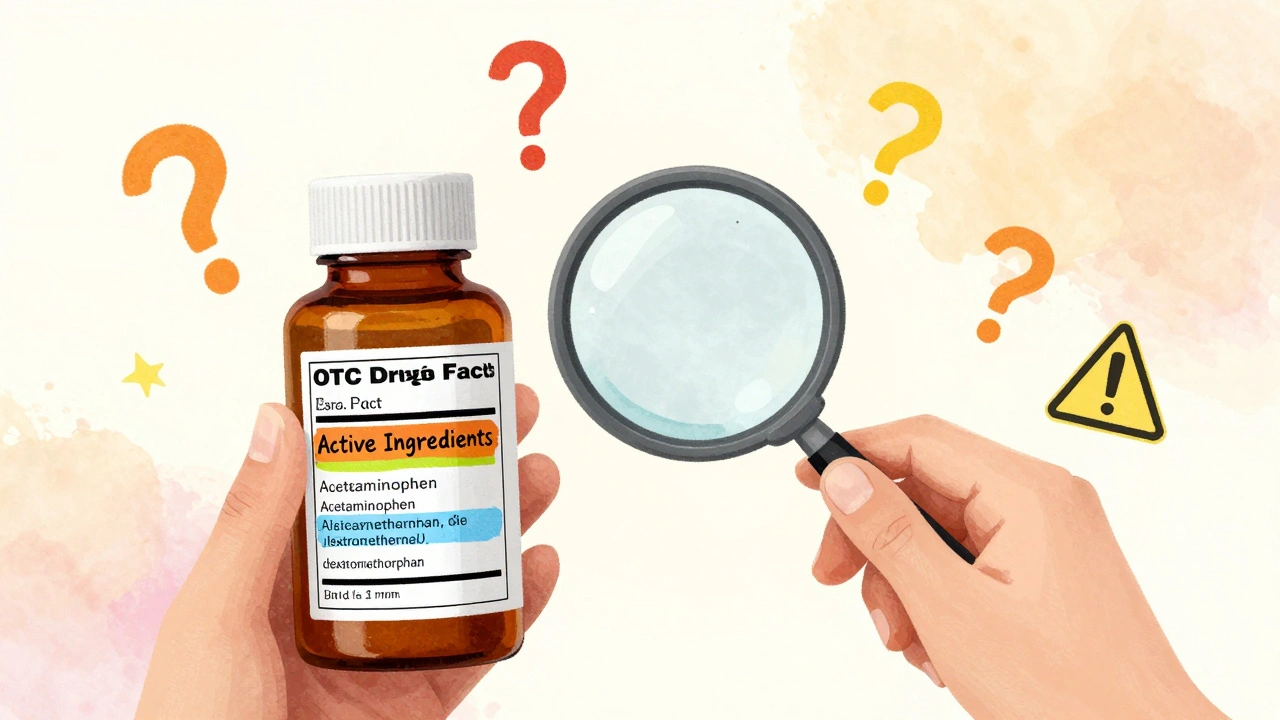
Learn how to read OTC drug facts labels step by step to avoid dangerous mistakes, prevent overdoses, and use over-the-counter medicines safely without a doctor’s help.
More