
When you grab a bottle of over-the-counter medicine, a medication you can buy without a prescription, often used for headaches, colds, or allergies. Also known as OTC drugs, these are meant to be simple, safe fixes—but they aren’t harmless just because they’re easy to get. Millions of people take them daily without thinking twice, but the truth is, OTC meds can cause serious side effects, dangerous interactions, and even hospital visits if used wrong.
Take acetaminophen, a common pain reliever found in dozens of cold and flu products. It’s safe at the right dose, but taking too much—even by combining different pills—can wreck your liver. Or consider NSAIDs, like ibuprofen and naproxen, used for pain and inflammation. They might help your back pain, but they can raise your blood pressure, hurt your kidneys, or cause stomach bleeding, especially if you’re older or on other meds. And don’t forget antihistamines, often in sleep aids or allergy pills, which can make you dizzy, confused, or fall. That’s why so many older adults end up in the ER after taking OTC sleep meds.
These aren’t edge cases. They’re everyday mistakes. People don’t realize their cold medicine has the same active ingredient as their painkiller. They take OTC drugs for weeks because they assume "natural" means safe. They mix them with alcohol, blood pressure pills, or antidepressants without knowing the risks. And they ignore the fine print because it’s too small to read. But your body doesn’t care how small the text is—it reacts to what’s in the pill.
What you’ll find in the posts below isn’t theory. It’s real-world advice from people who’ve been there: how to spot hidden ingredients, how to avoid dangerous combos, when to skip OTC meds entirely, and how to talk to your pharmacist about what’s really safe for you. You’ll learn why expired pain relievers can be risky, how to read labels without getting lost, and what to do if you accidentally take too much. These aren’t warnings for someone else—they’re tools for you, right now, to use your medicine cabinet smarter and safer.
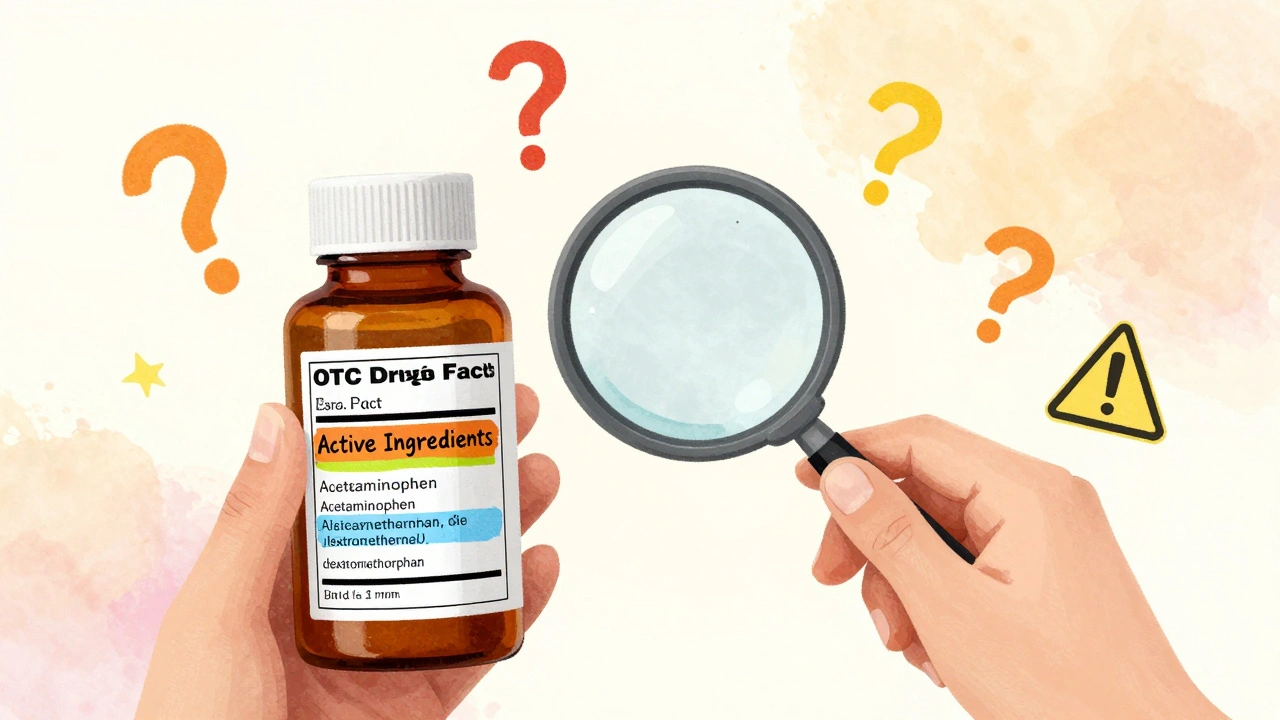
Learn how to read OTC drug facts labels step by step to avoid dangerous mistakes, prevent overdoses, and use over-the-counter medicines safely without a doctor’s help.
More