
When someone overdoses, especially on opioids, time isn’t just important—it’s everything. An overdose emergency kit, a portable set of tools designed to reverse life-threatening drug overdoses, typically centered around naloxone. Also known as naloxone rescue kit, it’s not just for addicts or healthcare workers—it’s for parents, friends, teachers, and anyone who might be near someone at risk. These kits are simple, safe, and designed for people with no medical training. They’re not magic, but they’re the closest thing we have to a second chance.
The core of any overdose emergency kit is naloxone, a medication that rapidly reverses opioid overdoses by blocking opioid receptors in the brain. It works on drugs like heroin, fentanyl, oxycodone, and even counterfeit pills laced with synthetic opioids. Naloxone doesn’t work on alcohol, benzodiazepines, or stimulants—but since opioids are behind most fatal overdoses, it’s the frontline defense. Kits often include two doses, nasal sprays or auto-injectors, gloves, and step-by-step instructions. Some even come with a rescue breathing mask. You don’t need a prescription in most places, and many pharmacies give them out free or at low cost.
Who should carry one? Anyone who knows someone taking prescription painkillers, uses opioids recreationally, or lives with someone in recovery. It’s also smart for people working in shelters, community centers, or schools. Overdoses don’t always happen in hospitals—they happen in bathrooms, cars, living rooms. A friend, a sibling, or even a stranger might need you to act fast. And you don’t need to be a hero to save a life. You just need to know where the kit is, how to use it, and the courage to step in.
Using an overdose emergency kit isn’t complicated. If someone is unresponsive, not breathing, or has blue lips, give one dose of naloxone in the nose or arm. Call 911 right away—even if they wake up. Naloxone wears off faster than some opioids, and the person could slip back into overdose. Keep them awake, on their side, and wait for help. Studies show that bystanders who use these kits have saved thousands of lives across the U.S. and Europe. This isn’t theoretical. It’s happening every day.
There’s no shame in having one. Having a kit doesn’t mean you expect an overdose—it means you care enough to be ready. And if you’ve ever worried about someone you love, you already know the weight of that fear. An overdose emergency kit turns fear into action. It turns helplessness into power. Below, you’ll find real stories and practical guides on how to store these kits safely, when to use them, and how to talk to loved ones about risk without sounding alarmist. This isn’t just about drugs. It’s about keeping people alive when it matters most.
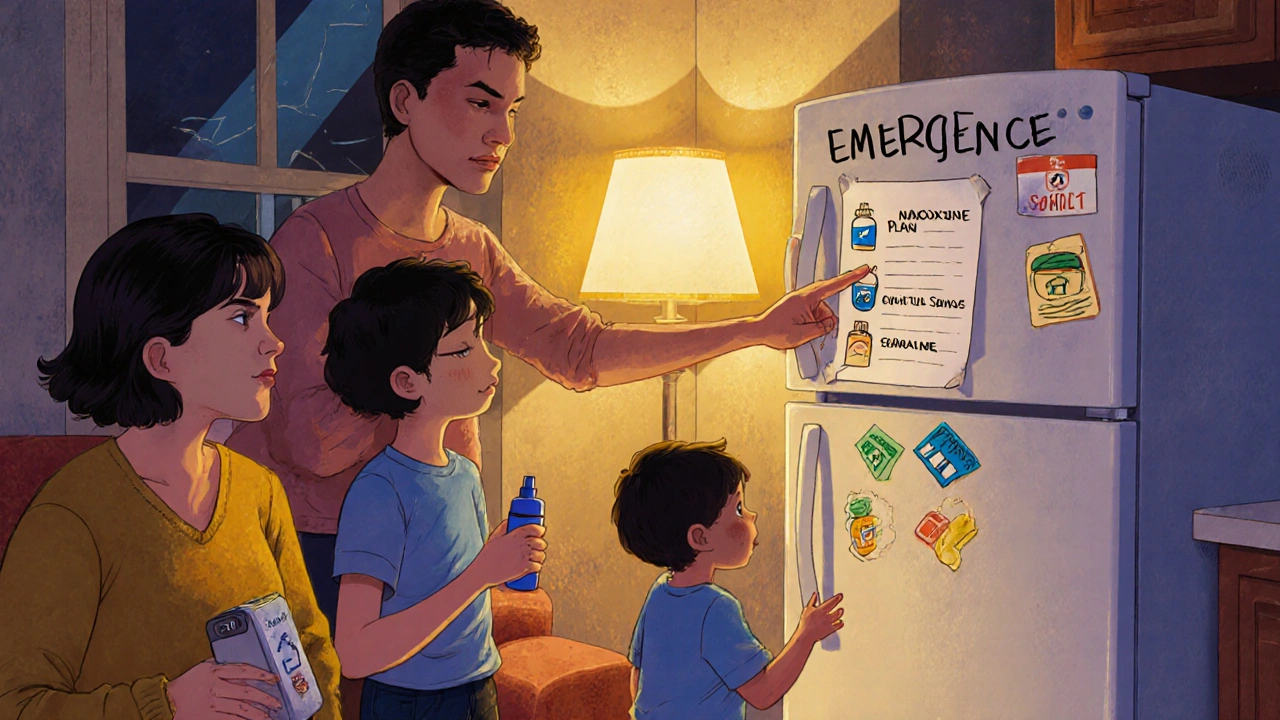
Learn how to create a family overdose emergency plan with naloxone, recognize opioid overdose signs, and respond quickly to save a life. Essential for households with prescription pain meds.
More