
When your PCSK9 inhibitors, a class of injectable drugs that block a protein raising bad cholesterol levels. Also known as PCSK9 monoclonal antibodies, they’re not your first-line treatment—but for many, they’re the only thing that brings dangerous cholesterol down to safe levels. These drugs don’t work like statins. Instead of slowing cholesterol production in the liver, they stop a protein called PCSK9 from destroying LDL receptors. More receptors mean more LDL cholesterol gets pulled out of your blood. The result? LDL levels can drop by 50% to 60%, sometimes even more.
This matters because high LDL cholesterol, the main type of cholesterol that builds up in artery walls and causes heart attacks is a silent killer. Even if you eat well and exercise, some people have genetic conditions like familial hypercholesterolemia that make their bodies produce too much LDL. Others have heart disease already and still can’t get their numbers low enough on statins alone. That’s where cardiovascular risk, the chance of having a heart attack, stroke, or other serious heart event comes in. Studies show PCSK9 inhibitors reduce heart attacks and strokes by about 15% over two years in high-risk patients—no fluff, no guesswork. And unlike some older drugs, they don’t cause muscle pain or liver issues in most people.
But they’re not for everyone. They’re injectables—given once every two weeks or once a month. They’re expensive, and insurance often requires proof you’ve tried and failed with statins or other options. Still, for those who’ve hit a wall with pills, they’re a game-changer. You’ll find real stories here: people who went from LDL over 200 to under 70, patients with a family history of early heart disease who finally feel in control, and others who avoided stents or bypass surgery because their numbers finally dropped. You’ll also see how they fit with other treatments—like statins, the most common cholesterol-lowering drugs that reduce liver cholesterol production—and why doctors sometimes combine them. There’s no hype here. Just clear facts, real patient experiences, and the science behind why these drugs work when nothing else does.
Below, you’ll find detailed posts on how PCSK9 inhibitors compare to other heart drugs, what side effects to watch for, who qualifies for them, and how they fit into broader strategies for managing heart disease and high cholesterol. No fluff. No marketing. Just what you need to know.
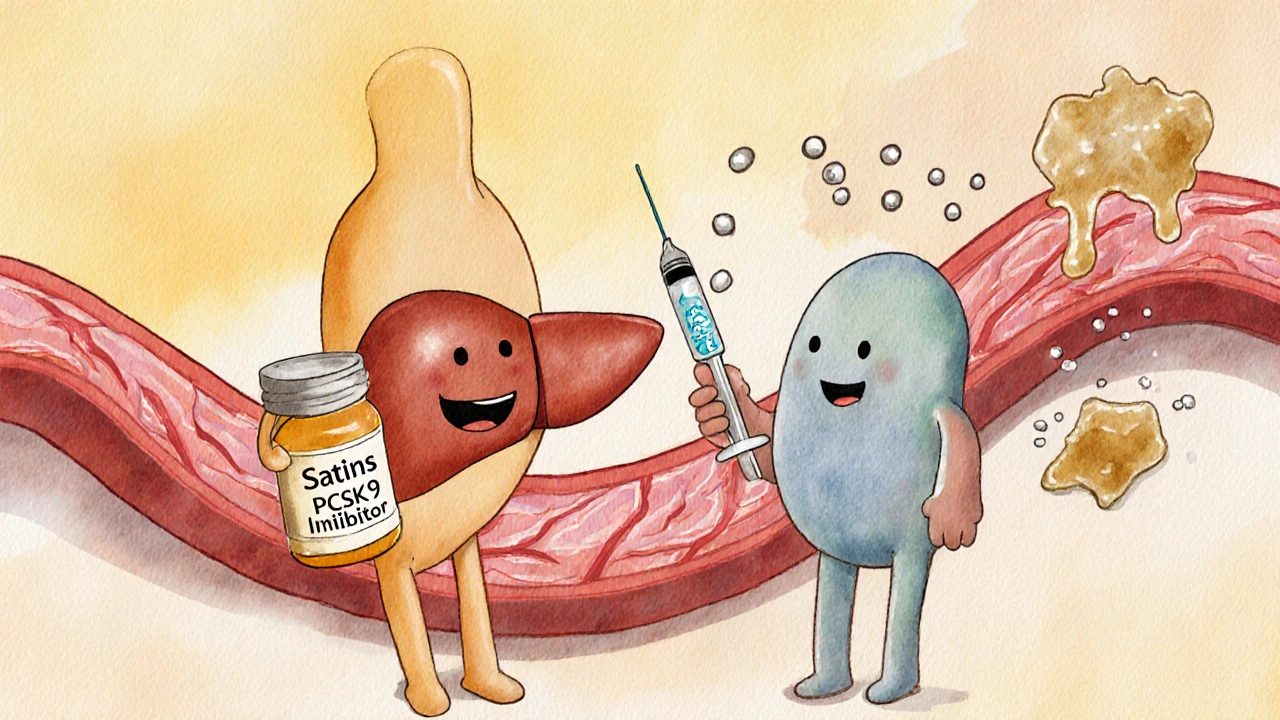
PCSK9 inhibitors and statins both lower LDL cholesterol, but differ in effectiveness, side effects, and cost. Statins are first-line for most, while PCSK9 inhibitors offer powerful alternatives for those with intolerance or very high risk.
More