
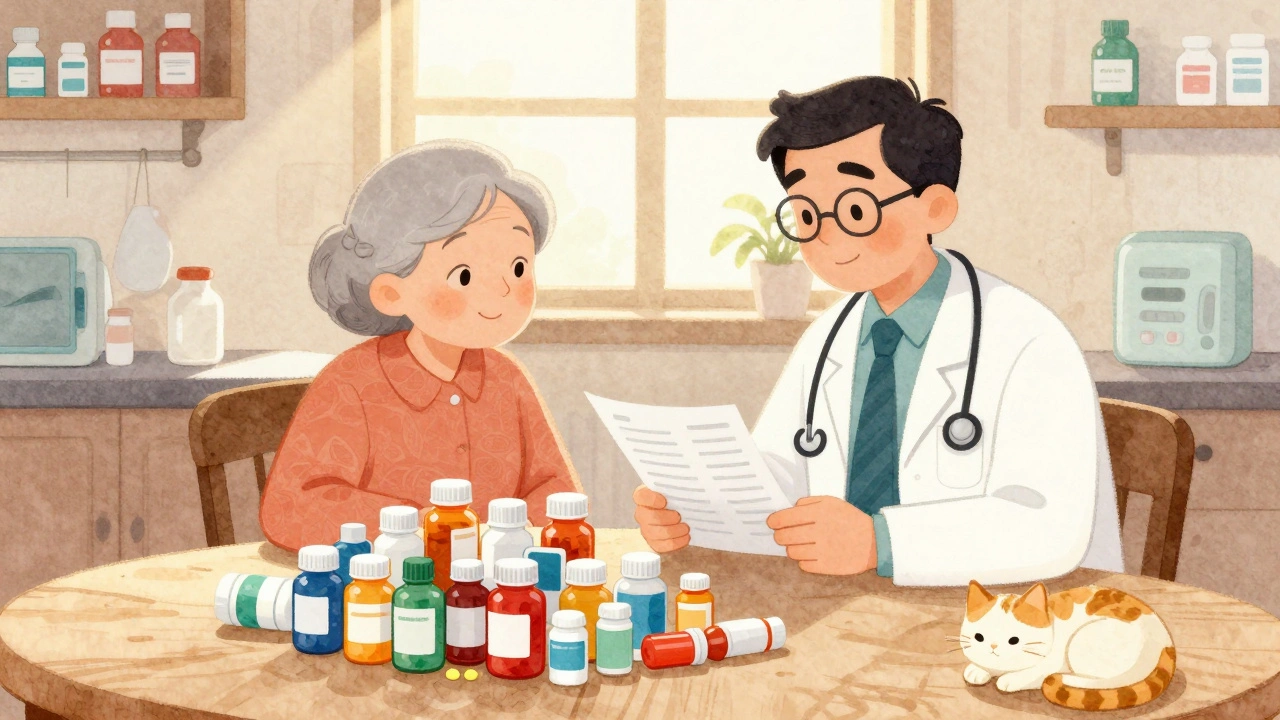
When older adults take polypharmacy in elderly, the use of multiple medications by older adults, often five or more, which increases the risk of harmful side effects and drug interactions. Also known as multiple medication use, it’s not always avoidable—but it’s often unnecessary. About 40% of adults over 65 take five or more prescription drugs daily. That’s not just common—it’s a silent crisis. Many of these drugs were prescribed for separate conditions by different doctors, with no one looking at the full picture. The result? Confusion, falls, kidney damage, dizziness, and even hospital stays that could have been prevented.
One big problem is drug interactions, when two or more medications affect each other’s performance or cause unexpected side effects. For example, mixing a blood thinner like warfarin with an NSAID like ibuprofen can lead to dangerous bleeding. Or combining a sedative with an antihistamine can cause extreme drowsiness, increasing fall risk. Then there’s geriatric pharmacology, how aging changes how the body absorbs, processes, and eliminates drugs. As we age, our liver and kidneys don’t work as well. That means drugs stick around longer, building up to toxic levels even at normal doses. And many seniors are prescribed drugs that were never tested in people over 75—so we’re flying blind.
It’s not just about the pills. medication safety, the practice of using drugs correctly to avoid harm, especially in vulnerable populations like older adults means knowing what each drug does, why it was prescribed, and whether it’s still needed. Too often, prescriptions just keep rolling over year after year—even when the original reason is gone. A hip pain pill taken for a sprain five years ago? A sleep aid for temporary stress? These linger, adding to the pile. And when patients don’t understand their own meds, they might double up, skip doses, or mix them with supplements that clash.
But it’s not hopeless. The fix isn’t always stopping drugs—it’s reviewing them. A simple medication review with a pharmacist or primary care doctor can cut out unnecessary pills, replace risky ones, and simplify the regimen. Tools like pill organizers, automated refills, and clear labels help too. And sometimes, the best treatment isn’t a pill at all—it’s physical therapy for balance, better sleep habits, or diet changes that reduce the need for blood pressure meds.
In this collection, you’ll find real, practical advice on how to manage multiple medications safely. We cover how to read labels correctly, what to ask your doctor before starting a new drug, how to spot dangerous interactions, and how to use Medicare programs to lower costs without sacrificing safety. You’ll learn why expired drugs can be deadly for seniors, how to store high-risk meds securely, and how to report side effects that could save someone else’s life. This isn’t theory. These are the tools real people use every day to stay healthy, independent, and in control—even when they’re on a long list of prescriptions.
Many seniors take too many medications that no longer help-or may even harm them. Learn when and how to safely stop or reduce drugs through deprescribing, a proven way to improve safety, reduce side effects, and boost quality of life.
More