
When you fill a prescription, you’re not just getting medicine—you’re sharing sensitive health data that can be tracked, sold, or stolen. Protect prescription privacy, the practice of securing your medication records from unauthorized access or exposure. Also known as pharmacy data security, it’s not optional—it’s essential for your safety and autonomy. Your prescription history reveals your diagnoses, mental health status, chronic conditions, and even personal habits. If this data falls into the wrong hands, it can lead to insurance discrimination, identity theft, or even targeted scams.
Prescription data security, the systems and behaviors that keep your drug records confidential isn’t just about passwords. It’s about how you handle refill requests, what information you share with online pharmacies, and whether your pills are stored where others can find them. For example, using a medication lockbox, a secure container to store high-risk drugs at home prevents family members or visitors from accessing your prescriptions. Similarly, pharmacy privacy, the policies and practices that govern how pharmacies handle your personal health information varies widely—some still fax prescriptions, others use unencrypted portals. You need to ask questions: Does your pharmacy send refill reminders via text? Can you opt out of data sharing with third parties? Are your records encrypted?
Many people don’t realize their doctor’s office, pharmacy, and insurance company may share your prescription details with marketing firms, data brokers, or even employers under loopholes in HIPAA. You have rights—like requesting a copy of your prescription history, asking for anonymized records, or switching to a pharmacy with stronger privacy policies. And if you’re on long-term medication, like warfarin or lithium, a single data leak could expose your condition to predators or lead to dangerous interference with your treatment.
Protecting your prescription privacy isn’t about being paranoid—it’s about being informed. It means knowing who has access to your pills, how your data moves, and what steps you can take to lock it down. Below, you’ll find real-world guides on how to manage refill labels safely, use lockboxes for high-risk drugs, report side effects without exposing your identity, and avoid scams that target patients with chronic conditions. These aren’t theoretical tips—they’re actions real people use every day to stay in control of their health data.
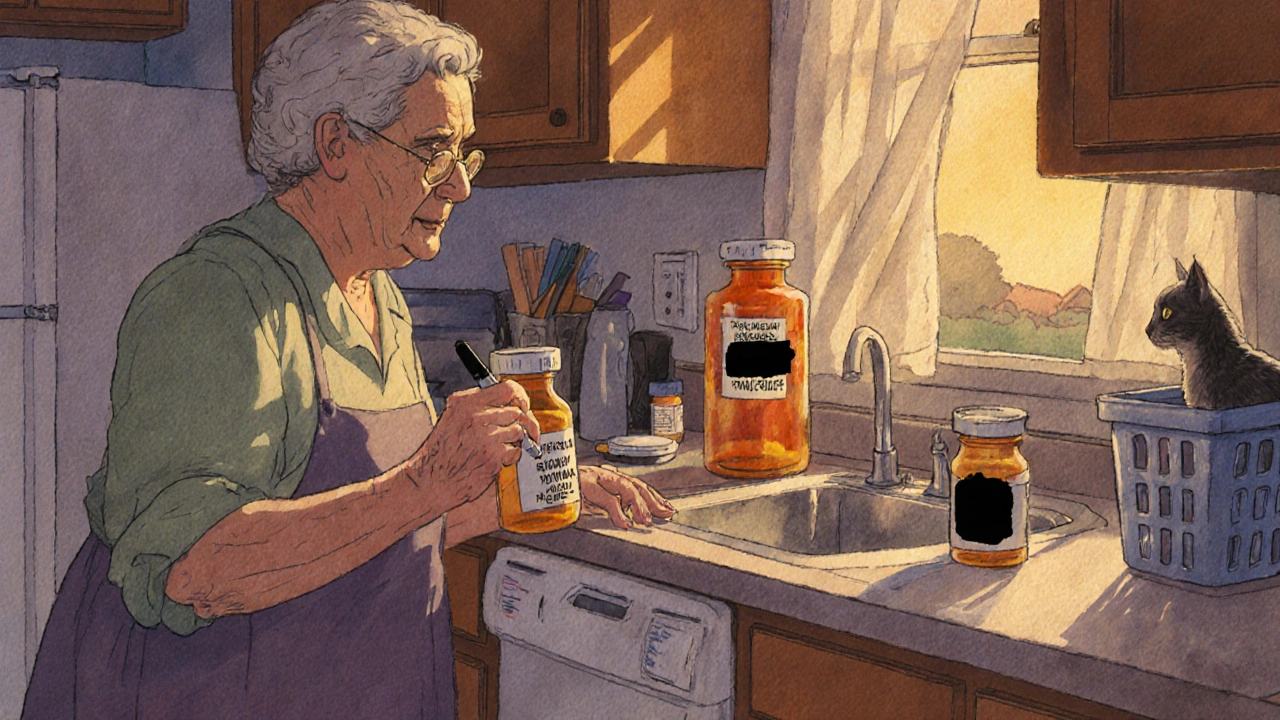
Learn how to safely dispose of old medications while protecting your personal information from identity theft. Follow FDA and HIPAA guidelines for destroying prescription labels and using take-back programs.
More