
When you pick up a prescription, the medication label, the printed information on your prescription bottle that tells you how, when, and why to take the drug. Also known as drug label, it’s not just a formality—it’s your first line of defense against errors, side effects, and dangerous interactions. Most people glance at the name and dose, then toss the bottle in the drawer. But skipping the fine print can cost you more than time—it can cost you your health.
Every label holds critical clues. The refill information, the number of refills allowed and when they expire tells you how long your supply lasts and when you need to contact your doctor. Missing a refill deadline isn’t just inconvenient—it can lead to missed doses, worsening conditions, or even withdrawal. The dosage instructions, whether to take the drug with food, at bedtime, or on an empty stomach directly affect how well the medicine works. Taking a pill with food when it says "take on an empty stomach" can slash its effectiveness by half. And the warning symbols, like "may cause drowsiness" or "avoid alcohol" aren’t suggestions—they’re red flags that could prevent a hospital visit.
Many people don’t realize that the same drug can look completely different depending on the pharmacy or brand. A generic version of your pill might be a different color, shape, or size, but it’s supposed to work the same. Still, if you suddenly see a pill you don’t recognize, don’t guess—call your pharmacist. That’s how many accidental overdoses and missed treatments start. And if you’re on multiple meds, reading labels helps you catch dangerous combinations. For example, mixing certain painkillers with blood thinners can lead to internal bleeding. Or taking an antidepressant with a cold medicine might trigger a rare but deadly reaction called serotonin syndrome.
You’re not just reading a label—you’re reading your safety plan. The FDA and CDC both say that patient errors with medications are one of the leading causes of preventable harm. But it’s not about being perfect. It’s about being curious. Ask yourself: Does this match what my doctor told me? Is the dose the same as last time? Does this warning match what I’ve experienced? If something feels off, it probably is. And you don’t need to be a doctor to spot that.
Below, you’ll find real stories and facts from people who’ve been there—how to decode refill limits, why expiration dates matter more for some drugs than others, how to spot hidden risks in small print, and what to do when a label contradicts what your doctor said. These aren’t theory pieces. They’re the kind of guides you keep on your phone, because when you’re holding a bottle of pills, you need answers now—not tomorrow.
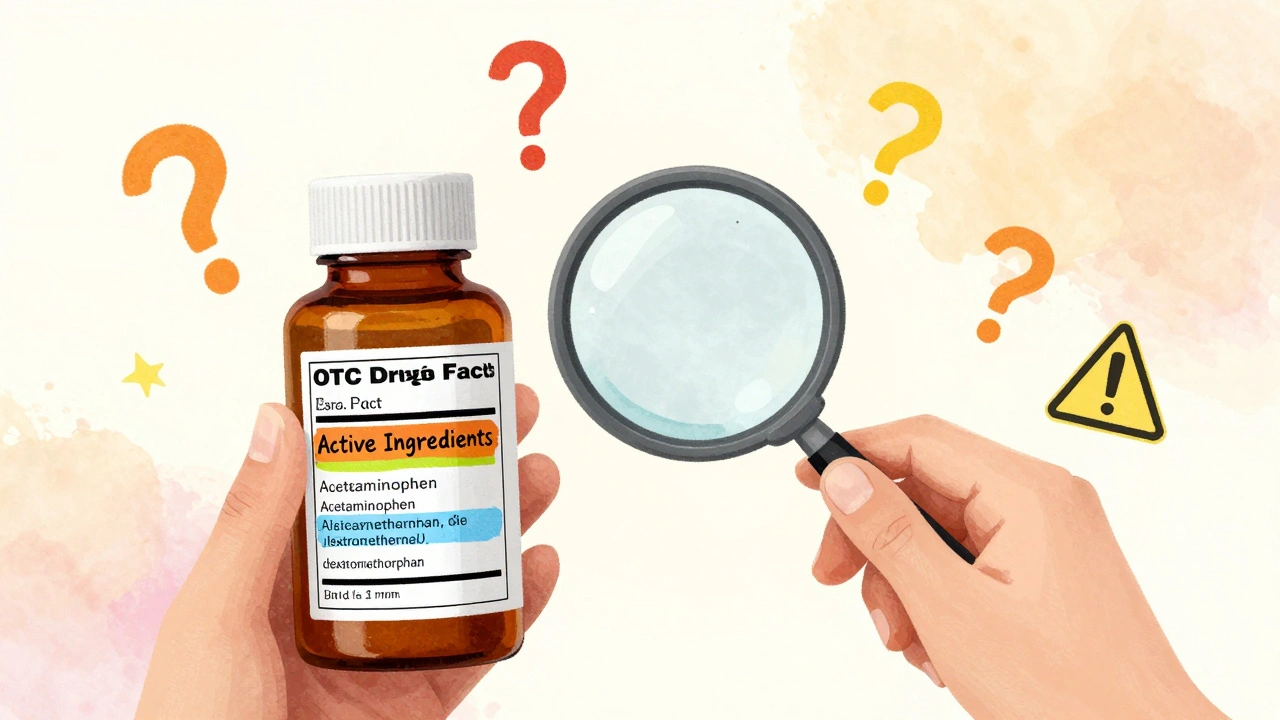
Learn how to read OTC drug facts labels step by step to avoid dangerous mistakes, prevent overdoses, and use over-the-counter medicines safely without a doctor’s help.
More